Learn how ai real estate marketing is gradually taking market share from social media marketing efforts, and what realtors can do to keep up.

There’s a lot of noise right now around ai real estate marketing, and most of it is rooted in fear.

Agents are being told that if they don’t master artificial intelligence immediately, they’re going to fall behind. That if they don’t understand prompt engineering or every new AI tool on the market, their business will somehow disappear.

That’s not the real risk.

The real shift isn’t about whether you know how to operate AI. It’s about whether AI can find you.

And that’s where the battle between social media and AI-driven search becomes very real.

VIDEO: The Social Media vs AI Real Estate Marketing Battle – Which Will Win?

The First Era: Search Dominated Real Estate Marketing

To understand where ai real estate marketing is going, we need to revisit where digital marketing started.

In the early 2000s, search engines dominated visibility. Showing up on Google determined whether or not you generated online leads. Pay-per-click advertising exploded. IDX websites became lead machines. Entire real estate teams were built around capturing and converting search traffic.

Authority lived in search results.

If you ranked, you won.

That structure created durable visibility. When someone searched “best real estate agent in Phoenix,” the agents with optimized websites and strong SEO showed up consistently.

Search rewarded authority.

The Second Era: Social Media Took Over Attention

Around 2010, social media platforms shifted how agents approached marketing.

Agents became influencers. Visibility became personality-driven. Engagement, likes, comments, and shares replaced keyword rankings as the perceived measure of success.

We teach social media at ICT because it plays an important role. It builds familiarity. It humanizes your brand. It keeps you visible to your audience.

However, social media introduced a structural weakness most agents never accounted for.

Social media content does not compound.

It moves down a feed. It disappears. It is designed for short-term engagement, not long-term authority. You can post daily for years and still have very little searchable footprint.

That worked when attention was the primary battlefield.

But AI has shifted the battlefield back to search.

AI Real Estate Marketing Is Pulling Power Back to Search

When consumers open ChatGPT or Gemini and ask, “Who is the best real estate agent in my area?” they are not scrolling through social feeds.

They are asking a direct question.

AI platforms pull from indexed website content, structured blog articles, Google reviews, YouTube content, and established authority signals. They pull very little from Instagram posts or Facebook updates.

That distinction changes everything about ai real estate marketing.

If your marketing strategy lives primarily on social media, you are largely invisible inside AI-generated search results.

Not because you aren’t talented.

But because you built your visibility inside platforms AI doesn’t heavily index.

  • Google Local Services Ads for REALTORS® – and Additional Online Lead Sources (Icenhower Institute)

    $249
    ICT Online Course

    Google Local Services Ads for Realtors
    & Additional Online Lead Sources
    Google Local Services Ads course Icon

    Generate high-quality leads with Google Local Services Ads and beyond.

    • Step-by-step training to set up and run Google Local Services Ads (GLSA)

    • How to maximize visibility and generate exclusive, high-intent leads

    • Additional online lead sources every REALTOR® should leverage

    • Budgeting strategies to get the most out of your ad spend

    • How to track results and measure ROI with online lead systems

    • Downloadable ad templates, tracking sheets, and setup guides
    Add to Cart

    Unlock Google’s Power

    Learn how to set up and run Google Local Services Ads that bring in ready-to-act leads.

    Diversify Online Lead Sources

    Discover additional platforms and strategies to expand your lead flow.
    Maximize ROI

    Use tracking tools and budgeting models to get the best return on every dollar spent.

    Designed for all learning types

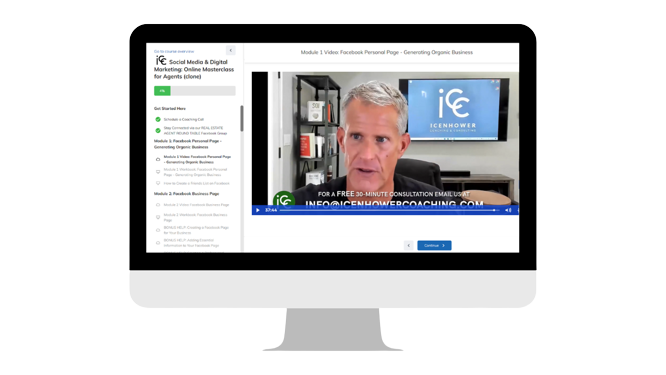
    Video Training

    In-depth video training walking you through each module of the course, explaining the strategies, tips, and best practices for using Canva for real estate agents.

    Written Workbook

    Detailed and downloadable written workbook that provides you with a bullet point outline, summarized text, action steps, key takeaways, as well as space for taking notes.

    Instructor Materials

    Teach this course at your organization with the help of our downloadable presentation notes, presentation files, and Instructor's Manual.

    Course curriculum

    Enrollment includes access to the following course materials for 6 months

    Module 1: Local Services Ads
    • Module 1 Video: Local Services Ads
    • Workbook: Module 1: Local Services Ads
    • Quick Tip: 3 things that make you appear more frequently for Local Services Ads
    • Generating Listing Leads with Local Services Ads
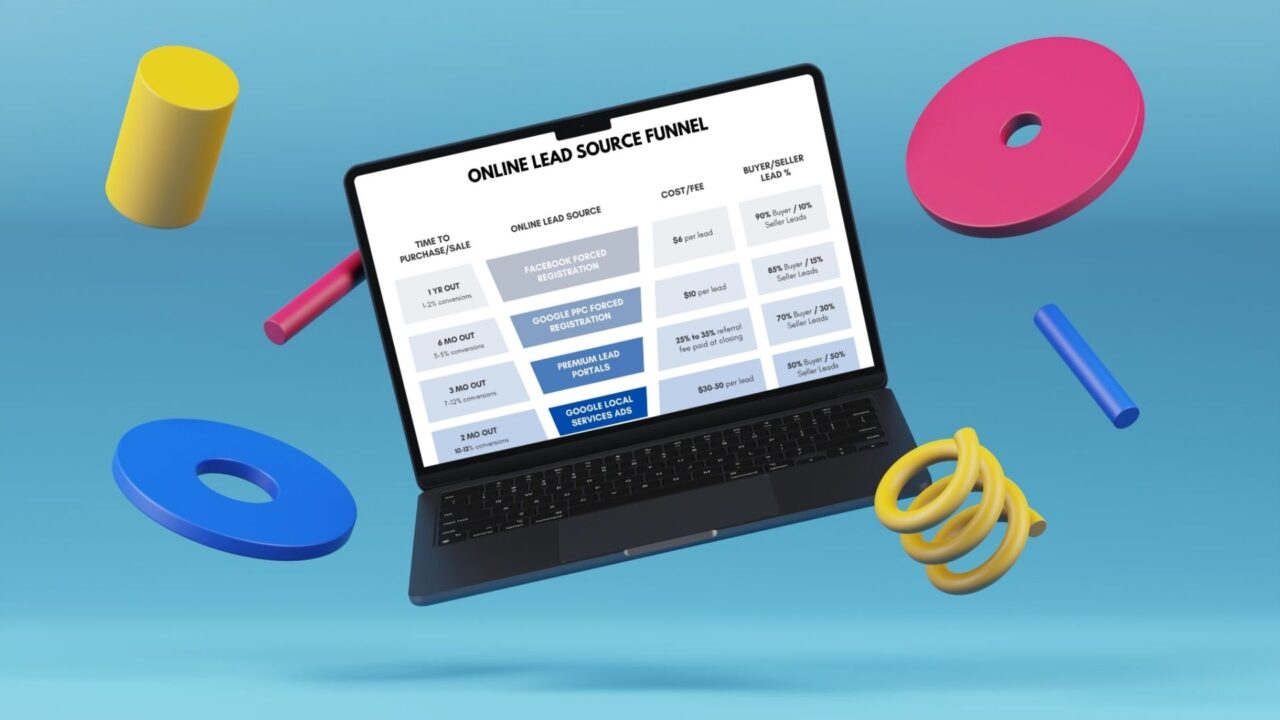
    • Online Lead Source Funnel
    • Quick Tip: Starting off on the right foot
    Module 2: My Business Profile
    • Module 2 Video: My Business Profile
    • Workbook: Module 2: My Business Profile
    • Creating Multiple Google My Business Locations
    • How to Create Multiple Google Locations for a Real Estate Agent
    • Quick Tip: If you are struggling to get locations verified
    • How to Create Multiple Google Locations for a Real Estate Agent
    Module 3: Online Reviews
    • Module 3 Video: Online Reviews
    • Workbook: Module 3: Online Reviews
    • Best Practices for Generating Google Reviews
    • Asking for a Review
    • Asking for a Google Review Template
    • Leave Us a Review Social Media Template
    • Google Review Request Email Template
    • Example Video: Reviews Request
    • Google Review Script & Instructions for Staff
    • Quick Tip: Reviews for each location
    • Online Review Job Post (Word doc with social post text)
    • Online Review Job Post (PowerPoint design file template)
    • Advanced Techniques for Getting Google Reviews
    Module 4: Maximize Your Online Presence
    • Module 4 Video: Maximize Your Online Presence
    • Workbook: Module 4: Maximize Your Online Presence
    • Google Posts
    • How Real Estate Agents Rank Higher on Google
    Module 5: Grow Your Business-to-Business Database with Google
    • Module 5 Video: Grow Your Business-to-Business Database with Google
    • Workbook: Module 5: Grow Your Business-to-Business Database with Google
    • Real Estate Vendor List Template
    • Real Estate Vendor Program Scripts
    Module 6: Additional Online Lead Referral Services
    • Module 6 Video: Additional Online Referral Lead Services
    • Workbook: Module 6: Additional Online Referral Lead Services
    • Online Lead Referral Sources
    Google Local Services Ads for Realtors

    About this course

    • $249.00
    • 38 lessons
    • 3 hours of video content
    Add to Cart

    Immediate Takeaways

    Here is what you can expect to gain from taking this online course.

    • Learn about Local Services Ads and how to leverage them to dominate the local real estate market
    • Business profile best practices and how-to to create a profile that will showcase the value you provide
    • How to get reviews and use them to grow your business
    • Action Steps at the end of each module to help you apply what you just learned

    Reviews

    "I use ICT systems, the Icenhower Institute, and the coaching program to coach and train my team of over 30 agents. I use the ICT dashboard systems to keep my entire team accountable for their activities and set proper expectations." Jake Rockwell Over 500 Units Sold Annually "I have coached with ICT for over five years. ICT has helped me quadruple my luxury business through marketing strategies so that I receive listings and sales through lead generation and multiple pillars of income." soi audio workbook Dennis Adelpour Luxury Agent - West Los Angeles "When we started coaching with ICT we worked all the time with some degree of success. Now, seven years later, we have grown to have the #1 market share in our area, we more than tripled our income and production, while also improving our work-life balance to enjoy our personal life with family and friends." recruit audio workbook Tammi Humphrey #1 Market Share & 100 Million in Annual Sales Volume Instructor
    Brian ​Icenhower.

    What are Local Services Ads (LSA) for Realtors? Our industry is shifting, again, thanks to technology.

    Once upon a time, Zillow dominated the online lead scene. But recently we have seen a shift away from Zillow — so where do we go next? Why is Zillow going away? How is Zillow going away? Why should we be going someplace else? 

    You’ve got a lot of questions, and so did we. Luckily for you, we got the answers, and we put them all together into this online course for you.

    What are you waiting for?

    Master online real estate leads — discover what you need to do, learn the best practices Top Producers use to generate and accelerate their businesses, and become the #1 Realtor in your desired neighborhood!

    Add to Cart

    Talk to a coach

    If you've been considering hiring a coach, now's the time. Book a FREE coaching consultation session with your purchase of this course! Book Your Call Team Onboarding Real Estate Coaching See all courses

    Quick View
  • 1×1 Solo Agent Weekly Coaching Program

    $1,000 / month

    This 1×1 Solo Agent Weekly Real Estate Coaching Program designed to help you increase your production and your commission income with strategies and systems for sustainable business growth.

    Quick View

Why Blogging Is About to Experience a Major Revival

There is going to be a serious resurgence in blogging over the next several years — not because blogging is trendy again, but because AI reads text.

Artificial intelligence evaluates depth. It analyzes structured content. It identifies consistent patterns of expertise. It favors long-form authority over short-form noise.

Strategic blogging is one of the most powerful drivers of ai real estate marketing visibility right now.

This doesn’t mean random blog posts. It means structured, keyword-driven, market-specific authority content.

If someone searches:

  • “Best real estate agent in Denver”

  • “How to sell a home in Scottsdale”

  • “Luxury real estate marketing strategies”

Your website needs to have long-form, optimized answers to those questions.

That is how AI recognizes authority.

Social Media Is Attention. AI Is Intent.

This is the clearest way to understand the battle.

Social media is attention-based marketing. AI-driven search is intent-based marketing.

When someone scrolls social media, they may be entertained or informed. When someone asks AI a direct question, they are signaling intent. They are looking for a solution.

Intent carries more weight.

In ai real estate marketing, the agent who shows up when someone asks a buying-intent question holds a strategic advantage over the agent who is simply visible in a feed.

Social media still matters. It builds brand familiarity and relational trust.

But it does not replace searchable authority.

Why Google’s Ecosystem Still Controls the Landscape

Google’s footprint is massive. That is why Gemini is positioned so strongly in the AI search space. It is integrated into search engines, email systems, browsers, and productivity platforms.

AI is not replacing Google. It is enhancing Google.

That means your Google reviews, your website authority, your YouTube presence, and your indexed blog content all influence how AI platforms perceive your expertise.

This is the controllable side of ai real estate marketing.

You cannot control how fast AI evolves.

You can control whether you are building durable authority assets.

How to Build Authority That AI Can Recognize

If you want to win this battle, you must shift from temporary visibility to permanent authority.

That starts with structured blogging on your own website. Long-form content that answers real questions in your market becomes searchable, indexable, and AI-readable.

It also means embedding your YouTube videos into blog posts and including transcripts. AI reads text more efficiently than it interprets video alone. A transcript increases your searchable footprint dramatically.

Additionally, prioritizing Google reviews strengthens your credibility signals across search platforms. Review volume and consistency contribute to how AI evaluates your local authority.

Most importantly, you must think long term.

Most agents will not do this work. It feels uncomfortable. It requires consistency. It doesn’t provide instant dopamine like social media engagement does.

That lack of participation creates opportunity.

The One Thing You Can Control in AI Real Estate Marketing

There are many aspects of artificial intelligence that you cannot influence.

You cannot dictate platform algorithms. You cannot predict every technological advancement.

But you can control whether AI can find you.

You can control:

  • Whether your website demonstrates expertise.

  • Whether your content answers search-based questions.

  • Whether your reviews reinforce your authority.

  • Whether your marketing assets compound over time.

This is where marketing directors, team leaders, and brokerage owners must focus.

The agents who build searchable authority now will face dramatically less competition later. The majority will stay comfortable on social media. The minority will build indexed dominance.

The minority will win.

So Which Will Win: Social Media or AI?

This is not about one replacing the other.

Social media will continue to play a role in relationship building.

But in terms of market dominance, lead generation, and long-term authority, AI-driven search is going to carry more weight.

Search is back.

Authority matters again.

And ai real estate marketing is not about mastering technology — it is about mastering visibility.

The real question is not which platform wins.

The real question is whether you are building assets that compound or content that disappears.

Because the agents who understand this shift early are not going to be chasing business.

They are going to be found.


TRAINING VIDEO TRANSCRIPT: The Social Media vs AI Real Estate Marketing Battle – Which Will Win?

Okay, so I hear this all the time when we talk about artificial intelligence. There’s so much fearmongering around it. It’s almost like you’re going to get left behind. You’re going to get left in the dust if you don’t get up to speed on AI.

There are two pieces of this I want to talk about.

Number one: that’s not necessarily true.

Your ability to navigate tools like Gemini or ChatGPT is helpful, but in most cases within the real estate profession, service providers are rolling out tools that are already infused with AI. You don’t need to be the raw architect of those systems. If you want to search for things and write better prompts, that’s great. Learning how to search well and write effective prompts is important—just like it was important to know how to search effectively on Google. The difference is you can do a little bit more with AI.

But stressing out that all of this is going to pass you by? No. These tools are going to be marketed to you like candy. They’re going to be infused into products you already use. New products will be created around AI. They’re not going to pass you by. They’re going to be all over your inbox and your social media feeds.

I’m not here to fearmonger. But I do want to talk about something I see happening.

There’s a quiet battle going on between social media and AI.

Search engines came first. After Y2K, after the year 2000, search engines really took off. Showing up in search became everything. That’s when pay-per-click advertising exploded. That’s when real estate teams started being born, because suddenly we could create excess leads through search.

Around 2010, social media really started to grow. You saw people become social media rock stars. And I’m not knocking social media. It’s important. We teach it. We coach it. It matters.

But we don’t want to be just there.

Here’s why: if you are only on social media, you are not going to show up in AI.

AI pulls very little—if anything—from social media. For example, we get tons of coaching clients because when someone searches, “Who’s the best real estate coach for brokerages?” we usually come up first. “Who’s the best real estate coach for teams?” we usually come up first. “Who’s the best real estate coach?” We’re consistently in the top three.

Why?

Because we aren’t just on social media.

We have extensive content indexed on Google. We have a large volume of Google reviews. We have YouTube content that gets pulled into search engines and lives there long term. Social media posts, on the other hand, go down the feed and disappear.

If you want to be relevant, if someone searches “best real estate agent in Denver, Colorado,” you need to show up where AI is looking.

That’s why we’ve been pushing Google reviews even more than Zillow reviews. That’s why we’re pushing YouTube content so heavily. That’s why we’re pushing blogging.

There is going to be a revival in blogging like you’ve never seen.

Strategic, effective blogging is likely the single biggest factor driving AI-based searches right now. I don’t know about you, but I personally don’t search much on Google anymore. Like most people, I’m going to Gemini. That’s the trend. It’s becoming infused with everything, and people are getting very comfortable with it.

My recommendation is to learn Gemini. I believe that’s the future of AI for our industry, which is heavily search-driven. Google’s footprint is simply too large to compete with. Gemini is integrated with email, search, and everything else in the Google ecosystem. It can change how you operate.

You also need to search yourself. What is Google saying about you? Who is Google saying is the best in your area?

It better be you.

If it’s not, then we need to do some things differently. Because when it comes to AI, this is what you can control. Search is back in a major way, and social media is going to lose some clout.

There are still effective strategies on social media. But those who are only social media famous—posting quick content, short blurbs, surface-level material—without putting in the deeper work are going to see some decline.

More than half of our new coaching clients right now say they searched us on ChatGPT and we showed up as the best—best for teams, best for brokerages. We’ve built a strong historical presence in those areas.

That’s not accidental.

Getting good at blogging, teaching blogging, coaching your agents on blogging, coaching them on YouTube—these things matter. You need to learn how to craft blogs that attract AI.

For example, if you have a video on your blog post, you should post the full transcript of that video at the bottom of the blog. That helps AI pick it up more easily. That’s one simple tactic. Just having the video is not enough. Include the transcript at the bottom.

You can still have your normal written content. But that transcript at the bottom is powerful.

Understanding these strategies attracts business to you so you’re not always hunting for it. That’s powerful.

I know this stresses some people out. Yes, there’s a lot to learn. But I love learning-based professionals. Many of our clients are the highest producers or the largest brokerages in their markets. We’ve been coaching and training this for years.

Their fishing poles are already in the water. We’re just moving over the school of fish.

The rich are going to get richer in this environment.

But if you’re not preparing for the future, this is the one thing you can control with AI. This is what you should be thinking about right now.

If you have administrative support, develop that person into a blogger. If you’re by yourself, learn to do it yourself. For the future, the most important role of a marketing director—or you, if you’re solo—is to create effective blogs, understand keywords, and consistently publish optimized content.

We have a course on this at the Icenhower Institute that walks through exactly how to do it.

Get uncomfortable. The good news about something being hard and uncomfortable is that most people won’t do it. That means you’ll have less competition online.

You know what to do. Now go do it.

Hope that helps.