-
Quick View
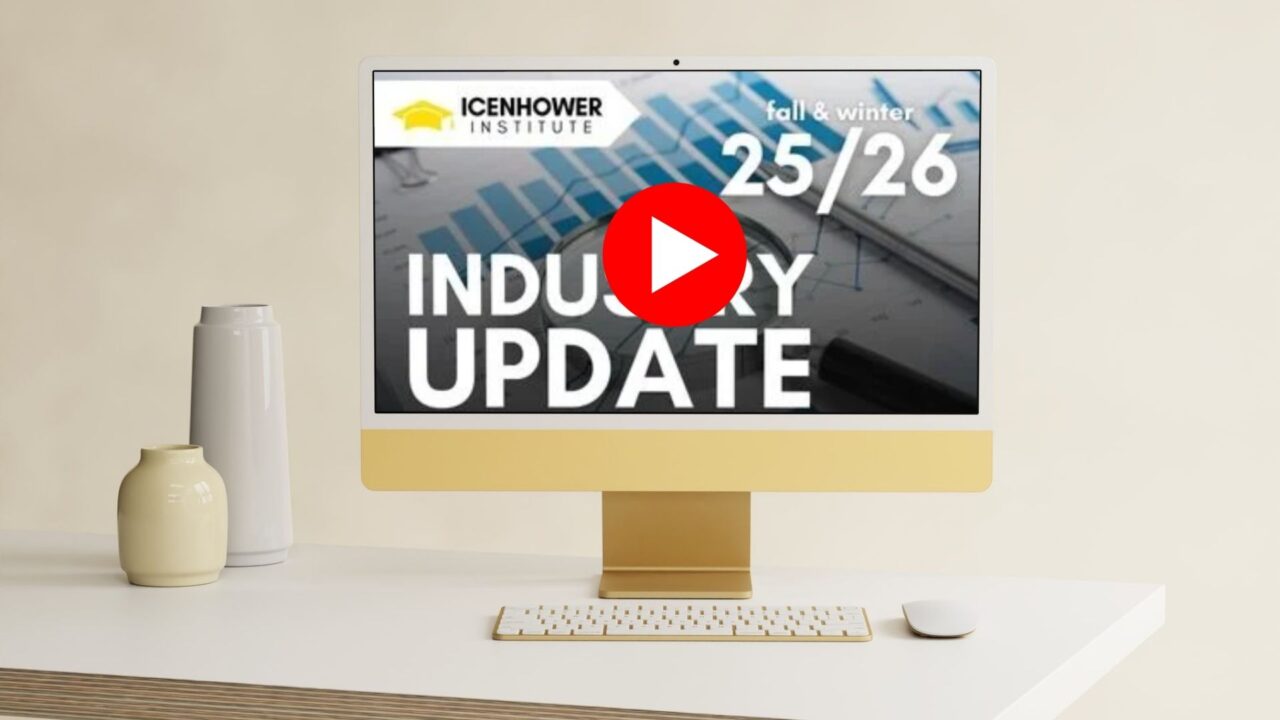
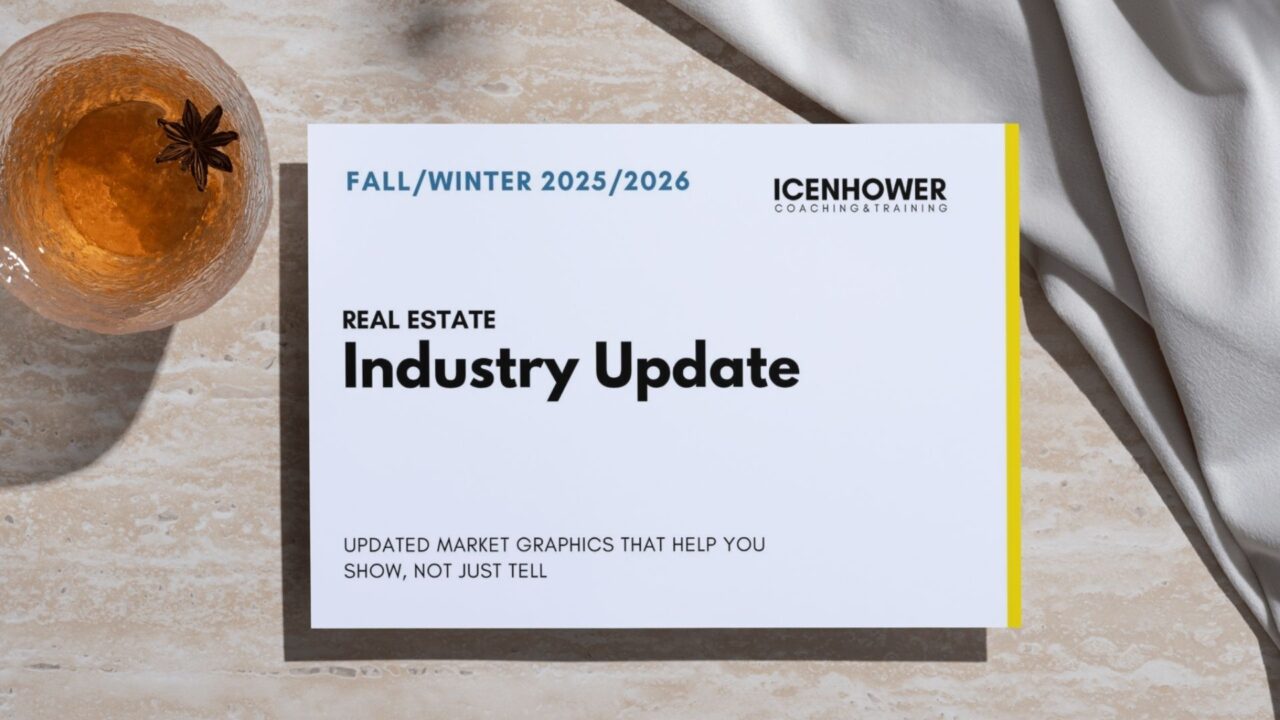
Industry Update: Fall & Winter 2025/2026 Real Estate Market Slides & Talking Points
ICT Online CourseIndustry Update: Fall & Winter 2025/2026
Real Estate Market Slides & Talking Points

Stay informed and confident with the latest real estate market insights for Fall & Winter 2025/2026.
-
Access the newest market slides, charts, and talking points from Brian Icenhower
-
Learn how to explain market trends to clients with clarity and confidence
-
Get ready-to-use scripts and dialogue for listing appointments and buyer consultations
-
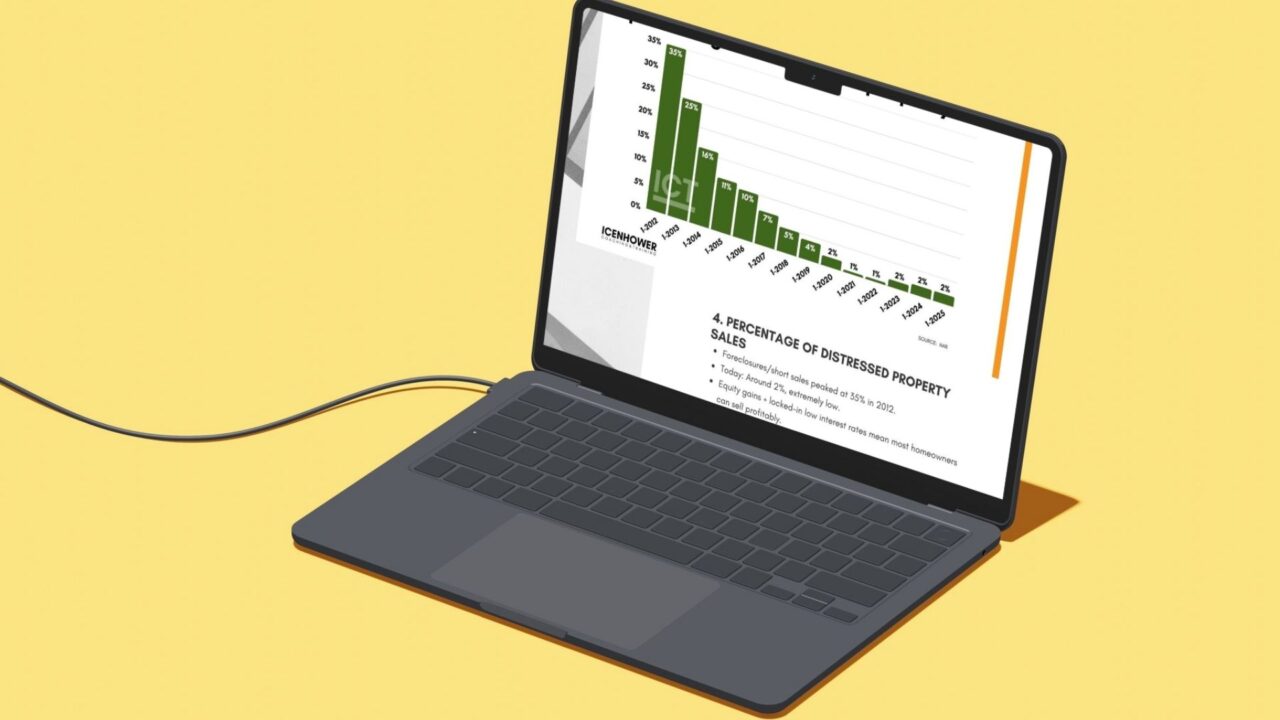
Understand what’s driving shifts in prices, inventory, and sales volume right now
-
Receive downloadable presentation materials and workbooks for your team or brokerage
-
Stay ahead of your market by knowing what’s next for agents and leaders in 2026
Stay Market-Ready
Use expert analysis to interpret the latest data and guide your clients with confidence.
Lead with Insight
Turn Brian Icenhower’s market slides and talking points into powerful listing conversations.
Train Your Team
Equip agents with up-to-date materials, charts, and scripts that make market updates easy to present.
Designed for all learning types
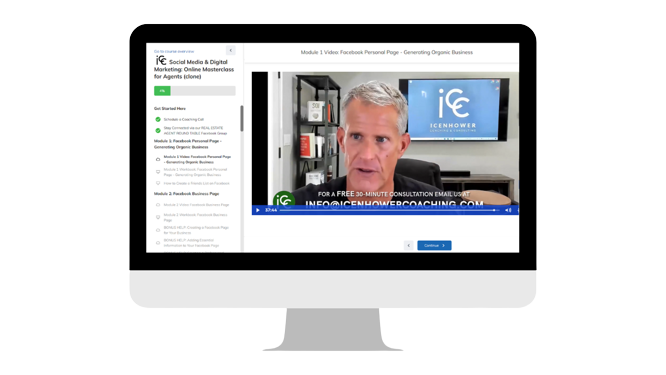
Video Training
In-depth video training walking you through each module of the course, explaining the strategies, tips, and best practices for using Canva for real estate agents.Written Workbook
Detailed and downloadable written workbook that provides you with a bullet point outline, summarized text, action steps, key takeaways, as well as space for taking notes.Instructor Materials
Teach this course at your organization with the help of our downloadable presentation notes, presentation files, and Instructor's Manual.Course curriculum
Enrollment includes 6 months of access to the following course materials
Welcome to Industry Update- VIDEO: Industry Update: Real Estate Market Slides & Talking Points with Brian Icenhower
- Industry Update Talking Points Workbook
- Industry Update Presentation
- Industry Update: Real Estate Market Slides – downloadable
- Industry Update – All Slides as Image Files – downloadable

About this course
- $135.00
- 6 months of access
Industry Update
Click to watch more about this real estate training course
Reviews
"I use ICT systems, Icenhower Institute, and the coaching program to coach and train my team of over 30 agents. I use the ICT dashboard systems to keep my entire team accountable for their activities and set proper expectations." Jake Rockwell
Over 500 Units Sold Annually
"I have coached with ICT for over five years. ICT has helped me quadruple my luxury business through marketing strategies so that I receive listings and sales through lead generation and multiple pillars of income."
Jake Rockwell
Over 500 Units Sold Annually
"I have coached with ICT for over five years. ICT has helped me quadruple my luxury business through marketing strategies so that I receive listings and sales through lead generation and multiple pillars of income."
 Dennis Adelpour
Luxury Agent - West Los Angeles
"When we started coaching with ICT we worked all the time with some degree of success. Now, seven years later, we have grown to have the #1 market share in our area, we more than tripled our income and production, while also improving our work-life balance to enjoy our personal life with family and friends."
Dennis Adelpour
Luxury Agent - West Los Angeles
"When we started coaching with ICT we worked all the time with some degree of success. Now, seven years later, we have grown to have the #1 market share in our area, we more than tripled our income and production, while also improving our work-life balance to enjoy our personal life with family and friends."
 Tammi Humphrey
#1 Market Share & 100 Million in Annual Sales Volume
I use ICC systems, the Online Learning Center, and the coaching program to coach and train my team of over 30 agents. I use the ICC dashboard systems to keep my entire team accountable for their activities and set proper expectations.
Tammi Humphrey
#1 Market Share & 100 Million in Annual Sales Volume
I use ICC systems, the Online Learning Center, and the coaching program to coach and train my team of over 30 agents. I use the ICC dashboard systems to keep my entire team accountable for their activities and set proper expectations.

Jake Rockwell
Over 500 Units Sold Annually I have coached with ICC for over five years. ICC has helped me quadruple my luxury business through marketing strategies so that I receive listings and sales through lead generation and multiple pillars of income.
Dennis Adelpour
Luxury Agent - West Los Angeles When we started coaching with ICC we worked all the time with some degree of success. Now, seven years later, we have grown to have the #1 market share in our area, we more than tripled our income and production, while also improving our work-life balance to enjoy our personal life with family and friends.
Tammi Humphrey
#1 Market Share & 100 Million in Annual Sales Volume Instructor Brian Icenhower.I created Industry Update to help you educate yourself and your clients on the current real estate market stats.
The point of this course is not to give you a bunch of predictions that either put you at ease or scare you about the real estate market. That’s not the goal. The point is to give you accurate information. To arm you with material with which to educate your client. More importantly, we are providing you with visual information, and the talking points around those visual assets so that you can clearly articulate what is happening in the market to your clients. People who want to buy a home, sell a home, or invest … they have a lot of questions based on what they’re hearing in the world today. Now more than ever they need a real estate professional to sift through all the madness and tell them what is really happening so they can make the best informed decisions with regards to the purchase and sale of real estate now and in the future. It’s super, super important that we use this data in a way that helps us convey a message. We aren’t arguing with our clients. We are simply the conduit of information, and we educate them. Now, more than ever, they will listen to us. Especially when you have these visuals and you can show, not just tell.
Understand today’s market. Lead with tomorrow’s data.
Enroll in the Industry Update: Fall & Winter 2025/2026 course to access the most current real estate market insights, downloadable presentation slides, and coaching resources for agents, team leaders, and broker owners.
Start now and stay ahead of every shift in the market.
Add to CartTalk to a coach
If you've been considering hiring a coach, now's the time. Book a FREE coaching consultation session with your purchase of this course! Book Your Call See all courses
-


Writen By
Brian Icenhower
Brian Icenhower is the Founder & Chairman of Icenhower Coaching & Training (ICT), which provides customized coaching and training programs to many of the highest producing real estate agents, teams, and brokerage owners in North America. This progressive company also produces online courses, podcasts, training materials, white label training portals, speaking events, video modules, and real estate training books. ICC is one of the largest real estate coaching companies in the world with thousands of clients and a large team of the most accomplished coaches in the industry.