preloader

The Real Estate Team Listing Manager Job Description

Learn the exact real estate team listing manager job description Brian Icenhower uses to help teams scale past 75 units a year without burning out agents.

If your listing agents are still writing their own CMAs, ordering their own lockboxes, and taking calls from sellers every time they get nervous, you don’t have a real estate team. You have a group of solo agents splitting overhead.

I see this on team after team. Leaders hire agent after agent but never build out the admin side of the business, and then they wonder why nobody’s lead generating. Today I want to walk you through the real estate team listing manager job description I use with my own teams and with every team I coach — what this role actually does, when to hire one, and why it’s one of the highest-leverage positions on your org chart.

Let’s get into it.

VIDEO: The Real Estate Team Listing Manager Job Description


What a Real Estate Team Listing Manager Actually Does

A real estate team listing manager owns everything that happens on a listing from the moment your agent walks out of the listing appointment to the moment that listing goes under contract. That’s it. Listing to contract. Once it’s under contract, it hands off to your transaction coordinator.

On the listing side, I want my listing agent doing three things and three things only: lead generating for more listings, going on listing consultation appointments, and negotiating contracts. If your agents are doing anything beyond that — writing net sheets, building CMAs, coordinating photographers, managing seller communication — you don’t have a real estate team listing manager job description in place. You’ve just got an agent doing two jobs for one paycheck.

The listing manager’s job breaks down into three buckets:

1. Pre-listing prep. Before your agent ever walks into that listing appointment, the listing manager should already have the seller’s net sheet built, the CMA pulled together, comps organized, and directions mapped out. None of this is complicated work. Someone taught you how to do it once — have your listing manager do it five times under your review, correct it, and hand it off clean from that point forward.

2. Listing-to-contract marketing and coordination. This is the meat of the job description, and it’s a long checklist for a reason. Before a listing ever hits the MLS, your listing manager should be lining up the just-listed social posts, coordinating the reel, getting the flyers built, ordering the lockbox, scheduling photos. I want two open houses on every single listing — the first two weekends — and the listing manager coordinates all of it because the agent can’t do that and generate new business at the same time.

3. Seller communication. This is the piece most teams skip, and it’s the piece that actually builds your brand. The minute your agent walks away from a signed listing appointment, I want the listing manager calling that seller before the agent even starts the car. Weekly after that, every seller gets an update — what happened last week on the checklist, what’s coming up next week — sent every Thursday before noon, followed by a call to confirm they got it.

  • ADMIN: The Training Process for Real Estate Administrative Assistants (Icenhower Institute)

    $299
    ICT Online Course

    ADMIN: The Training Process for Real Estate Administrative Assistants

    Admin course Icon (1)

    Master the systems and skills every real estate admin needs to support top agents and growing teams.

    • Training for key roles: Listing Manager, Transaction Coordinator, Office Administrator

    • Systems, checklists, and dashboards to streamline operations

    • Listing management from pre-listing through closing

    • Lead tracking and accountability tools

    • Strategies to free agents’ time for production

    • Downloadable forms, templates, and checklists
    Add to Cart

    Create Structure & Systems

    Learn how to implement checklists, dashboards, and tracking tools that keep your agents and business organized.

    Master the Admin Role

    Gain step-by-step training for listing management, transaction coordination, and day-to-day operational support.

    Boost Team Productivity

    Understand how to free up agents’ time by streamlining processes, ensuring accountability, and driving efficiency across the office.

    Designed for all learning types

    Video Training

    In-depth video training walking you through each module of the course, explaining the strategies, tips, and best practices for using Canva for real estate agents.

    Written Workbook

    Detailed and downloadable written workbook that provides you with a bullet point outline, summarized text, action steps, key takeaways, as well as space for taking notes.

    Instructor Materials

    Teach this course at your organization with the help of our downloadable presentation notes, presentation files, and Instructor's Manual.  

    Mergers & Acquisitions

    Click to watch more about this real estate training course

    Program curriculum

    Enrollment includes access to the following course materials for 6 months.

    Module 1: Introduction
    • Module 1 Workbook: Introduction
    • Video: Communication Foundations
    • Get to know the DISC Profiles
    Module 2: Understanding Job Roles
    • Module 2 Workbook: Understanding Job Roles
    • Video: Job Roles for Admin Staff
    • The Solution Triangle
    Module 3: The Administrative Manager
    • Module 3 Workbook: The Administrative Manager
    • Video: The Administrative Manager: Creating Structure
    • Sample Weekly Calendar
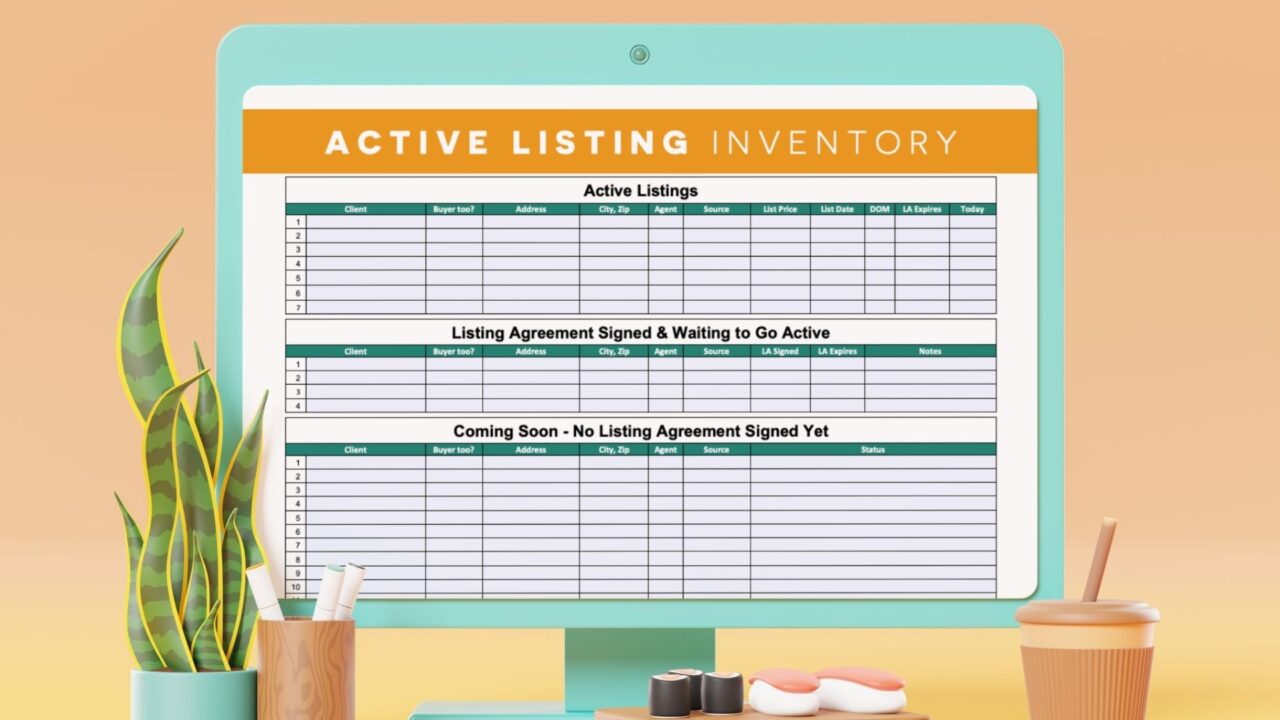
    • Active Listing – blank (fillable)
    • Sample Buyer Inventory
    • Daily Contact Form (fillable)
    • Sample Year-to-Date Check-Up Form 1
    • Sample Year-to-Date Check-Up Form 2
    • Lead Tracking Sheet (fillable)
    • Sample Pending Inventory Pipeline
    • Sample Dashboard 1
    • Sample Dashboard 2
    • Year-to-Date Check-Up Form (fillable)
    • Active & Pending Inventory Lists (fillable)
    • ICC Team Dashboard (fillable)
    Module 4: The Listing Manager
    • Module 4 Workbook: The Listing Manager
    • Video: The Listing Manager: From Listing to Contract
    • Listing and Pre-Listing Checklists
    • Listing to Contract Checklist
    • Pre-Listing Checklist
    • Seller Lead Sheet
    • Assistant’s First Call Checklist
    • Assistant’s First Call Checklist (fillable)
    • Defining Moments in Real Estate Transactions
    Module 5: The Transaction Coordinator
    • Module 5 Workbook: The Transaction Coordinator
    • Video: The Transaction Coordinator: From Contract to Closing
    • Buyer-Seller Checklist
    • Active Listing – blank (fillable)
    • Buyer Closing Checklist
    • Buyer Inventory
    • Buyer Lead Sheet (fillable)
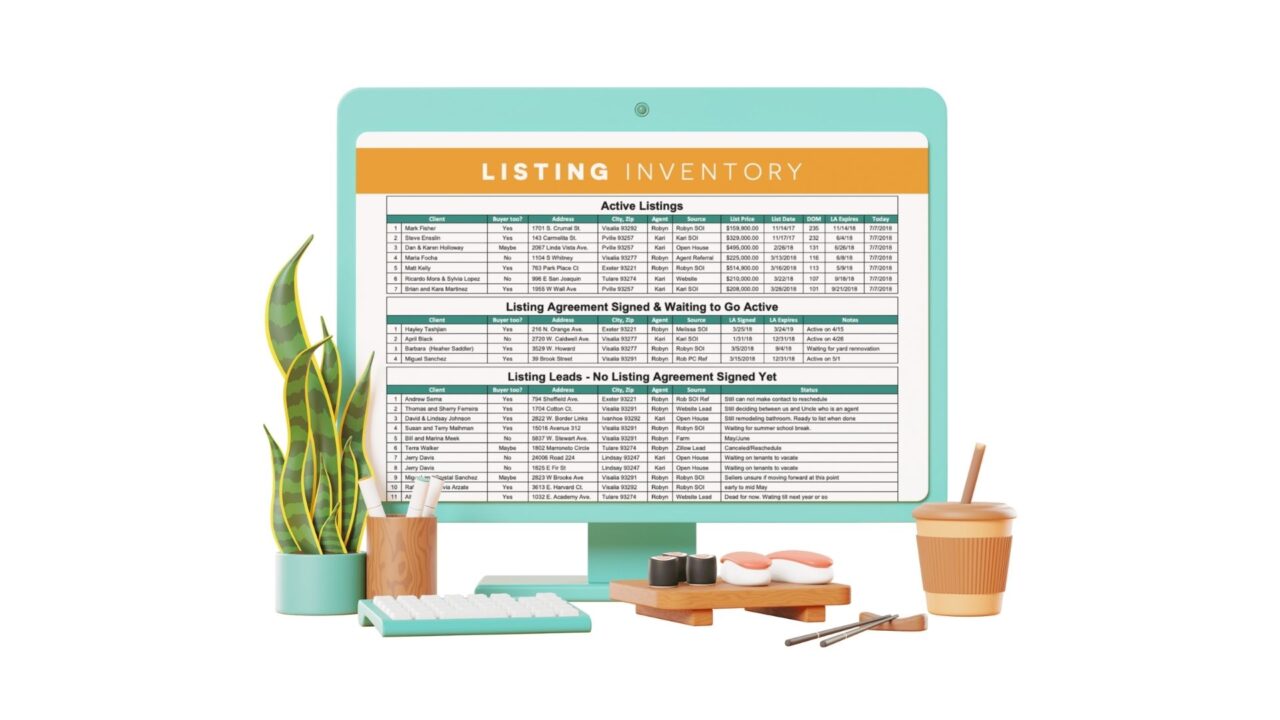
    • Listing Inventory
    • Pending Contracts – blank (fillable)
    • Pending Inventory Pipeline
    • Seller Closing Checklist
    • Buyer and Seller Checklists (fillable)
    Module 6: The Marketing Director
    • Module 6 Workbook: The Marketing Director
    • Video: The Marketing Director: Building your real estate business
    • Buyer Closing Checklist
    • Client Event Contact Plan
    • Listing to Contract Checklist
    • Script: Contacting past and existing clients
    • Pre-Listing Checklist
    • Seller Closing Checklist
    Module 7: Your Sphere of Influence
    • Module 7 Workbook: Your Sphere of Influence
    • Video: Your Sphere of Influence
    • Team Scoreboard
    • Graphic: The SOI Core
    Module 8: Enhancing the Client Experience
    • Video: Enhancing the Client Experience
    • Defining Moments in Real Estate Transactions
    Module 9: Managing Virtual Assistants & Remote Workers
    • Workbook: Managing Virtual Assistants & Remote Workers
    • Video: Managing Virtual Assistants & Remote Workers
    Module 10: Creating the Ultimate Client Experience
    • Workbook: Creating the Ultimate Client Experience
    • Video: Creating the Ultimate User Experience
    • Policies and Procedures Handbook
    • First Day Welcome Orientation Checklist
    • First Quarter Checklist – Admin – alternate
    • Editable First Day Welcome Orientation Checklist
    Module 11: Conclusion
    • Workbook: Conclusion
    • Video: Above and Beyond
    • Leader vs Manager
    • Production Growth Budget Schedule
    • Staff Self-Performance Appraisal
    • Sample Team Annual Business Plan
    • Editable Blank Business Plan
    • Editable Blank Action Steps
    Admin

    About this course

    • $299.00
    • 79 lessons
    • 5 hours of video content
    Add to Cart

    Reviews

    "I use ICT systems, the Icenhower Institute, and the coaching program to coach and train my team of over 30 agents. I use the ICT dashboard systems to keep my entire team accountable for their activities and set proper expectations." Jake Rockwell Over 500 Units Sold Annually "I have coached with ICT for over five years. ICT has helped me quadruple my luxury business through marketing strategies so that I receive listings and sales through lead generation and multiple pillars of income." soi audio workbook Dennis Adelpour Luxury Agent - West Los Angeles "When we started coaching with ICT we worked all the time with some degree of success. Now, seven years later, we have grown to have the #1 market share in our area, we more than tripled our income and production, while also improving our work-life balance to enjoy our personal life with family and friends." recruit audio workbook Tammi Humphrey #1 Market Share & 100 Million in Annual Sales Volume Instructor Brian ​Icenhower.


    Having someone back in the office helps agents amplify their sales potential. They can focus on generating business, following up on leads, conducting appointments, and writing offers/negotiating contracts -- all things that create more income.

    This 9-module course not only identifies the four key roles of a real estate assistant, but it also breaks down the precise workflows when serving as a listing manager, transaction coordinator, marketing director, and administrative manager.

    Whether you’re an agent learning how to train your assistant, an assistant looking for your own training process, or you’re both reading through these materials together, this course provides the explanations and concrete examples of best practices in real estate offices so you don’t have to.

    Make administrative tasks easy.

    Whether you’re an assistant or a solo agent, systematizing adminstrative processes will increase your efficiency. This course gives you the strategies, tools, and techniques to master administrative processes so your agents are free to focus on generating, nurturing, and converting leads. Add to Cart Add to Cart

    Talk to a coach

    If you've been considering hiring a coach, now's the time. Book a FREE coaching consultation session with your purchase of this course! Book Your Call Team Onboarding Real Estate Coaching See all courses

    Quick View
  • Team Coaching Program

    $1,250 / month

    The Team Real Estate Coaching Program is for smaller teams looking for internal structure, leverage and leadership.


    Quick View

When to Hire a Listing Manager for Your Real Estate Team

Here’s the benchmark I use: somewhere between 75 and 125 units closed per year, you need a dedicated listing manager. I go by units, not volume, because units create the workload — not sale price.

Before you hit that number, one admin is usually wearing four hats: listing manager, transaction coordinator, marketing director, and administrative manager. That works fine at low volume. But once you’re climbing toward that 75-unit mark, transaction coordination work starts to dominate their time, marketing around active listings slips first, and you’ll start seeing the stress show up — missed CMAs, late marketing, no time to pull a profit and loss together.

Start painting the path to this hire early. When your team is closing 40 to 50 transactions a year, start the conversation with your first admin: “When we hit this number, we bring on help.” Show them the light at the end of the tunnel. By the time a team scales to around 250 transactions a year, you’re typically running four admin roles to support it, and your original admin is often leading that team if they want that path.

Listing Manager vs. Transaction Coordinator: Capacity and Skill Set

These two roles get lumped together constantly, and they shouldn’t be. Here’s how they actually differ.

Workload capacity. A highly skilled, full-service transaction coordinator with good systems can handle around 40 pending files at once. A brand-new TC going through their first busy season — still building systems, still getting comfortable with client communication — is realistically closer to 20. A listing manager, on the other hand, can typically handle 60 to 70 active and pending listings at once, because the role isn’t as involved.

Experience required. Transaction coordination demands real estate-specific knowledge — contingency periods, disclosure timelines, what has to be filled out and when. A listing manager doesn’t need any of that. It’s largely a checklist role: get the lockbox ordered, get the sign up, get photos scheduled, get the marketing pushed out. You can hire someone with zero real estate background into this seat and train them fast.

Personality profile. Transaction coordination and administrative management tend to attract detail-driven, process-first people — precise, spreadsheet-comfortable, knowledge-based. Listing management and marketing tend to attract more social, influencer-style personalities, because there’s constant client-facing communication and creative output involved.

Should You Combine the Listing Manager and Marketing Director Roles?

When you get to that 75-to-125-unit range and it’s time to split your first admin’s job into two people, you’ve got two options.

Option one: one person handles listing-to-contract and contract-to-close (all the transaction work), and a second person handles marketing director and administrative manager duties.

Option two — my preference: combine listing manager with marketing director, and pair transaction coordinator with administrative manager.

I like the second split better because the listing manager and marketing director roles are already working shoulder-to-shoulder. You’re marketing two things constantly: the listing, and the agent. The listing manager can’t check an item off her list until the marketing director delivers the flyer, the reel, or the post — so these two people are talking to each other all day, not routing everything back up through the agent. That keeps the agent completely out of the marketing loop, which is exactly where you want them.

The Weekly Communication Standard That Builds Your Brand

I want my listing manager introducing herself to every new seller before I’ve even left the driveway. Something like: “I’m your customer service. I’m going to call you every week, email you every week, and I think you’ll find I’m a lot easier to reach than Brian.”

Every active seller gets a weekly email — sent every Thursday before noon — recapping what happened on the checklist and previewing what’s coming next. Then a follow-up call to confirm. That single habit is what keeps sellers from calling the agent out of anxiety, because they always know when they’ll hear from the team next.

Here’s the standard I coach teams on: if your clients are calling you, that’s not loyalty — that’s a customer service gap. Somewhere, communication broke down and they got worried enough to reach out. Good listing managers get graded on this. Zero unscheduled client calls is the goal on the scoreboard.

Why Teams Skip This Hire — And Why It’s Costing Them

Most teams that lack a real listing manager are running on fear, not strategy. Leaders get scared of paying someone every two weeks through a slow season, so they hand the work to a journeyman transaction coordinator charging a flat fee per file instead. It feels safer in the moment.

But look at the math over a full year, not just the slow months. If your team is producing 60 to 70 closings a year, a salaried admin is typically cheaper than per-file pricing anyway. The fear isn’t a financial argument — it’s a scarcity mindset.

There’s a bigger cost, too. If all you’re providing your agents is a per-file TC, your agents aren’t getting anything they couldn’t arrange on their own. That means your team isn’t actually providing value, and eventually your best agents figure that out.

Watch the Full Training

I go much deeper into the full listing manager job description, the exact listing-to-contract checklist, and how this role scales as your team grows in the video above — scroll up to watch if you want the complete breakdown.

Build This Role the Right Way

If you’re trying to figure out when to make this hire, how to structure the job description, or how to train someone into it, that’s exactly what we help teams build inside Icenhower Coaching & Training. Click on the button below to schedule your free call with an ICT coach.

Video Transcript


Prefer to read along? Here’s the full transcript from this training video.

What I want to talk about is the listing manager position on real estate teams — when do we add this person, what their work capacity is, a little bit about the job description and the workflow that goes through it, and a lot of the issues we see with listing managers when it doesn’t work the way it should.

Before I start, understand this is very different. When you’re running a real estate team, I strongly recommend you do not just have a team full of agents and then pay some journeyman transaction coordinator $500 a file or whatever. That’s unfortunately a trend that occurs in down markets, because everybody cuts their costs. But if the team starts producing 60 to 70 closings a year, typically you’re cheaper if you pay them every two weeks anyway. That’s just the math. The fear of paying every two weeks through the slow season is what prevents people from doing it. It’s just fear — not looking at the business on a profit and loss over the course of an entire year.

There’s another problem with that too: if the agency is just paying a TC, that means the team isn’t providing agents any value they couldn’t get on their own. They could actually leave the team and pay the same TC. Those TCs also don’t take on nearly as much work from agents on a team.

A buyer’s agent on a high-performing team that provides mass value should be doing lead generation, buyer consultation appointments, showing properties, negotiating contracts, and maybe repairs. That’s it. Everything else, including client communication, should go to the admin. If you don’t have that piece, your admin team is weaker than other teams’ admin teams, and your agents will be stressed out through the busy season because they’re servicing all the time instead of lead generating — because the team isn’t providing the value it should on the administrative front.

There are really three big things a team provides to its agents. Number one is leads — that’s what agents care about most. Number two is accountability, coaching, and training, and culture. Most teams gravitate there but often leave out the accountability piece, because that’s hard to do without the admin piece — otherwise agents get too busy to lead generate and just rely on the leader’s charisma and mentorship to carry the whole thing. The third is admin, and most teams lack there. They lack it because they assume agents don’t want it, and of course agents don’t want it — nobody wants to let go, even the original team leader. Everybody would rather gravitate to servicing tasks than lead generation tasks. It’s easier to handle business than to go generate it. That’s where you have to be uncomfortable, get vulnerable, block time. Agents say, “No, my clients need me.” We as leaders have to coach them on letting go.

So many teams fail because they have journeyman TCs doing the bare minimum — just putting information into a computer while the agent tells them everything to enter, duplicating tasks. They’re not owning the admin side at all, because of leadership fear of having another hand to feed every two weeks.

I don’t mind journeyman TCs temporarily, while you’re looking to hire your first or second TC — but it’s not your permanent structure. Same with virtual assistants. I like VAs, but if a VA is your listing manager long-term, make sure you’re watching the value they provide. It can be done virtually, but it has to be a person capable of the high level of value teams provide, because as the team gets bigger, we need to increase the admin services we provide. Culture alone won’t hold a 30-agent team together the way it does a 5-to-10-agent team, so we have to keep increasing and demonstrating our value. This happens a lot with the listing manager role.

When you start a real estate team, you typically have one admin doing four categories of work: listing to contract (our future listing manager), contract to close (our future transaction coordinator), marketing director duties, and the administrative manager duties — scoreboards, dashboards, finances, and everything else. That admin is only doing small pieces of each because they’re wearing four hats, especially in the busy season, when transaction coordination work dominates and marketing around listings starts to slip.

I say you’re going to need a listing manager somewhere between 75 and 125 units closed a year. I go by units, not volume, because units create the work. Well before you hit that number, show your admin the path: “When we get here, we get help.” At 40 to 50 transactions a year, start talking about it, showing the path to growth. By around 250 transactions, you’ll likely have four people in these roles, and your original admin may be leading them.

A full-service transaction coordinator on salary, with good systems, discipline, and training, can handle 40 pending files at once. A brand-new TC going through their first busy season might handle 20 — they’re still building systems and mastering communication. A good admin who’s the primary point of contact with the client, not the agent, will actually move faster. When I go to my dentist, I don’t want to see him — I want to see the hygienist. She’s the one I see every visit, and I love that dentist because he’s got that hygienist. You have to think like a business owner. If your clients need you directly for everything, I don’t know why you started a team in the first place.

On the listing side, I want the listing agent lead generating for more listings, going on listing consultation appointments, and negotiating contracts. That’s it. If you’re doing more than that on your team, something is wrong — either you’ve been talking to your clients too much, or your admin doesn’t have the skill set yet to handle that communication.

Good teams are constantly coaching their agents to let go — just like I coach you. Think of the outfielder who tries to run down every fly ball across the whole outfield. Eventually that team loses, because he can’t cover everywhere. We need lanes. If we put everything on the agent, they won’t lead generate. They won’t receive this coaching well at first — just like my kids don’t love being told to do homework — but I keep encouraging them until it becomes a habit. That’s leadership on a real estate team.

Here’s the job description breakdown: listing manager (listing to contract) is job one. Transaction coordinator (contract to close) is job two. Marketing director is job three. Administrative manager is job four. When you hire a second admin, you split that first admin’s job in half. One way: one person handles both transaction roles (listing to contract and contract to close), and the other handles marketing director and administrative manager. That works, but it’s not my favorite.

My preferred split, once you hit that 75-to-125-unit range: combine listing manager and marketing director into one role, and pair transaction coordinator with administrative manager into the other. The marketing director and listing manager roles work closely together — there’s a lot of marketing happening around listings, and marketing requires creativity. The transaction coordinator and administrative manager roles are more clinical and precise — spreadsheets, exact processes, more knowledge-based work specific to real estate contracts, contingencies, and disclosure timelines.

The listing manager role, by contrast, doesn’t require real estate experience. It’s largely checklist-based — no need to navigate contingencies or disclosure periods. The marketing director and listing manager roles tend to attract a more social, influencer-type personality, because there’s a lot of client communication once you’re carrying multiple active listings.

The minute I walk away from a signed listing appointment, I want my listing manager calling that seller before I even start my car: “Hi, this is Janet with the Brian Icenhower Real Estate team. I wanted to introduce myself and let you know I’m your customer service — I’ll call you every week, email you every week, and I think you’ll find I’m a lot easier to work with than Brian. Brian’s good at getting your house sold, but I’m going to give you the highest level of customer service you’ve ever seen.” She’s the reason you get five-star Google reviews, and she’s the reason clients don’t call the agent directly — because if they do, that means the communication system broke down somewhere.

That listing manager and marketing director will work closely together even on a 250-unit team, because we’re marketing two things: the listings, and ourselves. Before the listing appointment even happens, the listing manager should have net sheets, CMAs, comps, and directions ready to go so the agent can focus on generating business and going on the consultation.

The listing-to-contract checklist is long because of all the marketing involved — just-listed social posts, reels, flyers, everything that needs to happen before the listing goes live on MLS, because sometimes homes sell fast and you don’t want to miss the marketing window. I want two open houses on every listing, in the first two weekends, and the listing manager coordinates all of it, pushing the agent for the content she needs — “Go shoot me a reel” — and she can’t check the item off her list until the agent delivers.

This is how the biggest, most profitable teams — the ones whose agents actually bring in business from their own spheres of influence — operate. Their agents aren’t creating their own marketing material or social posts, because if they did, it wouldn’t be as good, and they wouldn’t have time to close as many transactions. Teams have the opportunity to provide this value that solo agents simply can’t produce on their own, and it’s why agents on a good team should look more successful than solo agents — which builds credibility both with recruits and with the agent’s own sphere of influence.

The listing manager role is very trainable — it’s really a checklist of steps like ordering a lockbox, getting a sign installed, scheduling photos. I’ve seen it combined effectively with a front-desk role. It’s not as stressful as the transaction coordinator role, which requires far more real estate experience. A skilled transaction coordinator can handle 40 pending files. A listing manager can typically handle 60 to 70 active and pending listings at once, because the role isn’t as involved.

I want that weekly email going out every Thursday before noon to every active seller — here’s what we did last week on the checklist, here’s what’s coming up next week — followed by a call to confirm they received it. This prevents sellers from sporadically reaching out to the agent, because they always know the update is coming. It should also remind them of upcoming deadlines: disclosure dates, contingency removal dates, inspection dates, closing dates. Every communication should be proactive.

If your clients are calling you, that’s a customer service problem — not a compliment. It means someone hasn’t communicated clearly enough, and they got anxious enough to call. A team that runs its admin systems well will see clients call far less, and agents will start to realize just how much value the team is actually providing — value that lets them sell more real estate and generate more net income than they would have made on a higher commission split going solo.

A lot of agents don’t believe a team can provide that kind of value, because they’ve never worked on a team with real admin systems in place. It all starts with letting go of the fear — and it only takes one down market or one ugly winter to prove why that fear was costing you all along.

free call with an icenhower coach
your own branded real estate learning management system

Receive our weekly emails!

online-course-cta-res

Follow Us on Social Media

blog-cta-res

Podcasts

FB-group-cta-res

Online Courses:

Books:

1
    1
    Your Cart
    Team Real Estate Coaching Program Remove
    Team Coaching Program
    1 X $1,250 / month = $1,250
    Contact Us Book a Coaching Call

    Let's connect

    Let's connect

    Get in Touch

    We make an effort to answer all inquiries within 24 hours. Please add any important details in the Message field, below.

    Marketing by

    Download Your Event Resources

    Share with Your Network

    Facebook
    Pinterest
    Twitter
    LinkedIn

    Let's connect

    Select at least 2 products
    to compare