Video Transcript
Prefer to read along? Here’s the full transcript from this training video.
Hello and welcome to Forward Slash Real Estate, the show for ambitious agents using technology to drive their business. Today we’ve got Brian Icenhower. Brian is a real estate coach and industry OG. He’s got over 30 years of real estate experience. We’re going to talk to him about differentiating yourself in a crowded field of real estate agents.
We’re going to talk to him about using social media to grow your sphere, common traps on social media, being vulnerable with your clients, and finally bringing it home — turning those likes into clients.
Brian, this has been a long time coming. Thank you for joining us on the show. So, for our audience that may not know you, would you give a quick introduction?
Sure. I’ve been in the business a long time — my wife tells me it’s been 35 years now in the real estate industry. A long time ago, probably 30 years back, I ran a real big team before teams were really a thing, and that turned into brokerages. Over the years I’ve had a coaching company, mortgage companies, title companies, insurance companies, property management. So I’ve had a hand in all of it, but my baby is our coaching and training company, and that’s been going strong for a good solid decade-plus now.
What we do is provide coaching — our niche is a little different. We typically coach leaders: agents who want to run a real estate team, a real estate brokerage, or a real estate national brand. We coach and consult them, we speak for them, we train for them. We have a team of coaches and trainers that handle most of that; every now and then I’ll get out of the house and do it myself, but I try not to — I really love my house.
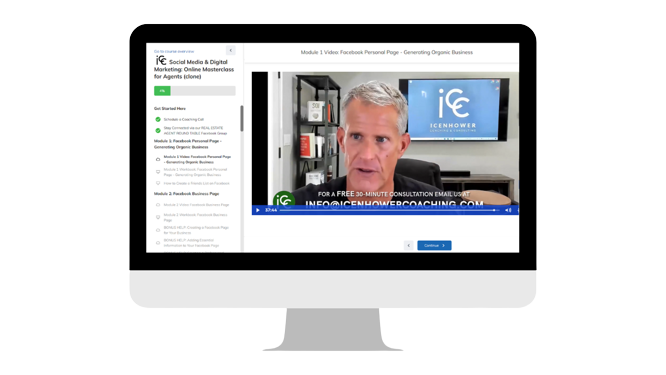
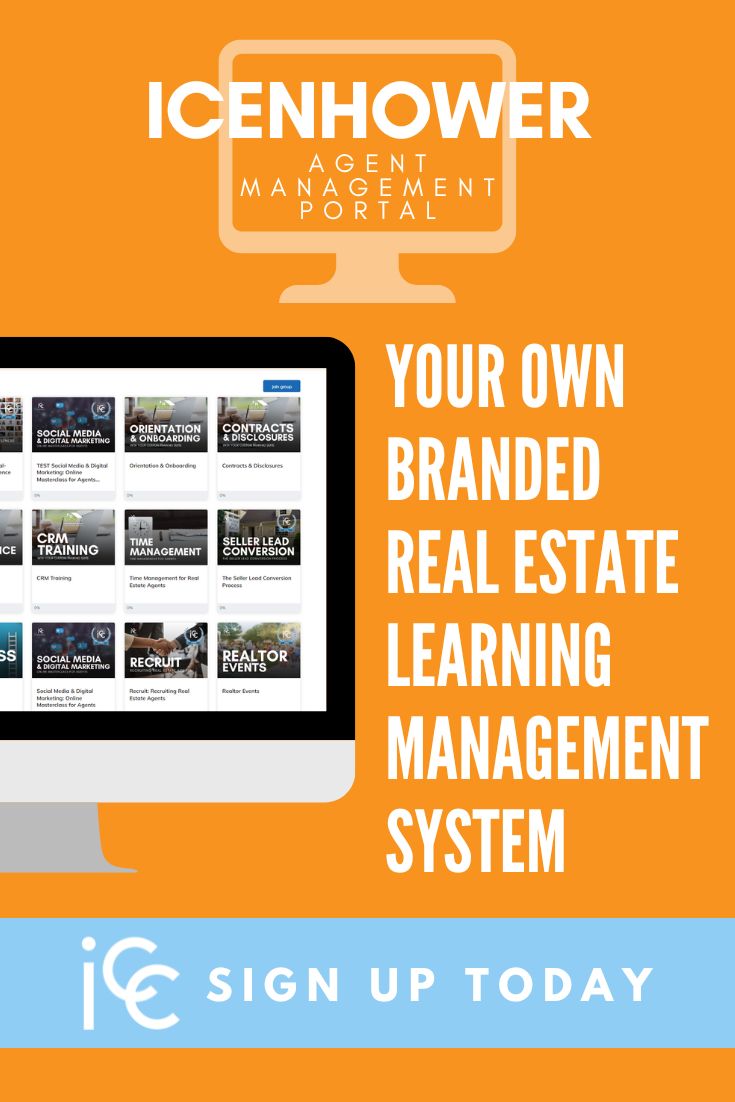
We also provide online training systems now — something we’ve rolled out over the last couple of years. It’s an agent management portal for a lot of our clients where they can create their own courses, use any of our training courses, certify their agents, and provide designations and certificates of completion. It’s all built in with AI, so they can hold in-person training courses with me on the screen, provide student workbooks and presentation slides for hundreds of our courses, and then create their own courses too — how to use their CRM, how to work their MLS, how to fill out listing agreements, disclosures, all of it. It’s got an AI course creator built in. That’s taken off like gangbusters. I’m an old guy learning the tech world, which is kind of funny.
Before we get into social media — I was watching one of your videos recently, and you said something that really resonated. You mentioned that roughly 1% of the population are real estate agents, and you were talking about the need to differentiate, and how a client needs to work with a professional, not someone treating it like a side gig. You gave an example about walking up to a counter where the person doesn’t want to deal with you. Can you expand on that?
Sure. It’s true — about 1% of the population, generally speaking, is real estate agents, pretty much anywhere you go. You can look at your MLS population against your city’s population and it’s usually right around that number. Especially with the commission lawsuits getting so much mainstream media attention, we really got to see what the public thinks about agents. I don’t think anyone besides agents was unhappy about the idea that commissions might come down — there was practically a rally cry about it. And personally, I don’t think agents are getting paid less commission unless they’re doing something wrong. But that public sentiment made itself known, and a lot of it comes from the belief that agents don’t deserve what they earn.
If you’re an ambitious agent who hones their craft and is serious about generating business, I’m speaking to the choir. But for the agent who isn’t, you need to separate yourself from them. The example I use: think about a farmers market. There’s a hummus guy — great hummus, lots of flavors, long line. But by the time you get to the front, he acts like he’s too busy for you, like he doesn’t want to deal with you. I never go back, no matter how good the hummus is. He made me feel bad. And most of the people in that line are first-timers — tourists. None of the locals like the guy.
Once someone treats you that way, it invokes strange negative emotions. You want that person to fail. It’s weird, but it’s real.
We’re really interested in the connection between technology and real estate, and we wanted to dig into your opinions on social media specifically. Do you actually enjoy being on social media, or is it purely work?
No — if it weren’t for business, I would never be on social media. I might be one of those stalker profiles that just watches, like a lot of Gen Xers are. But no, I’m on there for business, and to do it effectively you have to sell out your profile online. You’re not going to learn much about me personally. You’ll see my wife, my kids, and it’ll look like we’re all perfect and vanilla and happy. I’m basically running for mayor on there — you’re not going to get much “real” out of me.
That’s because agent websites, while great for lead generation and search, aren’t where people go to check someone out anymore. Now they go to Facebook and Instagram — that’s your new website. If you’re in real estate, people are going to check you out there. So you want to keep it vanilla, because whatever you wouldn’t put on your website, don’t put on your Facebook. If you’re not willing to sell out your online profile for your business, your family, and your goals, you end up looking part-professional, part-unprofessional — and that can seriously hurt your business.
I like that point about managing your branding. When you’re coaching leaders and agents on personal branding online, what’s the right level of “personal” to show?
It’s tough, because whether it’s Instagram or Facebook, you’ve got a business page and a personal page, and they serve different purposes. On your business page, it’s business content, but unfortunately you’re not going to get much organic traction — people don’t engage with brand pages, and when they don’t engage, the algorithm decides not to show it to many people. I look at the business page as your stagnant glamour website. It needs to look professional; if someone wants to check you out as an agent, they’ll click through from your bio link and see that you look great. That’s its purpose.
Your personal profile is different — you sell it out for your business, but in a more incognito way. We usually recommend a 3-to-1 or 4-to-1 posting ratio: personal content to business content. Don’t overpost business, or you’ll notice your engagement drop. Post what gets a lot of likes and comments, as long as it’s not off-putting. If you post something like a political jab, you’ll get plenty of comments, but you’re alienating half your potential audience in the process.
I love that — in marketing we say you want to attract, not repel. You want people to identify with your message without pushing anyone away. It’s tricky because the algorithm actually rewards controversy.
Exactly, and it’s hard because part of you likes the attention too. But all the quiet people watching are scared to death of you and don’t want you in their living room, so be careful. The same goes for religion. I’m a religious guy personally, but you wouldn’t know it from my social media, because I want to work with everyone — Muslims, Hindus, Jewish clients, everyone. I don’t want my business limited by my personal beliefs. I watch what I say about groups of people, and I even watch how I talk about my sports teams. I won’t trash the other team, because that’s the responsibility that comes with having a microphone for your business. That profile is your new website — if you’re a Kansas City Royals fan, you don’t need to alienate every Yankees fan in the city. Politics and religion are the two fastest ways to cut your audience in half.
If it’s genuinely important to you to share those opinions, consider a separate, anonymous account for that. Keep your business profile focused.
You mentioned a 3-to-1, 4-to-1 posting ratio — can you go deeper on what that actually looks like?
The best way to get engagement on social media is to post about a baby — an anniversary, a birthday, anything personal like that gets a huge response. Say a post like that gets 300 likes. The algorithm notices and starts showing more of your content to more people. Once you’ve built up that credibility, you can sneak in something like a new luxury listing — a walkthrough video — and people realize, “he lists some pretty impressive homes, maybe he could list mine.” But that post won’t get nearly the traction the personal one did, so you go back to personal content again. You mix it up.
Getting vulnerable is a lot easier than prospecting — easier than cold calling, easier than handwritten notes. It’s fast, it’s cheap, but you do have to drop your ego and put yourself out there.
You mentioned “getting vulnerable” a few times — can you unpack what that actually means?
We all want to look cool, especially in front of our friends — we don’t want to look like we need business. But if you don’t show that you want business, you’re the hummus guy again. You need to say, plainly, “I want your business. What can I do to earn it?” Statements like that are powerful, and just putting yourself out there shows people you’re open. Some agents want to be treated like top attorneys, who don’t chase business because clients come to them. If that’s already working for you, great — you don’t need this conversation. But if you want more business than you currently have, you need to get vulnerable. And again, it’s far less vulnerable than picking up the phone.
It sounds like you’re saying agents have to be willing to hear “no” to get that business — because ultimately you have to ask.
Absolutely. You have to show that you’re open for business at all times. Most agents don’t, and it shows in everything we’ve talked about. Being vulnerable enough to say you want more business than you currently have is crucial.
If someone’s sitting in front of their Facebook wondering what to post, what does that content actually look like for your top-performing coaching clients?
A lot of it is about helping their community. They’ll promote a new restaurant, an organization like the Boys and Girls Club, a local sports league — showing they’re connected to everything and everyone locally. They promote vendors, contractors, other local businesses — that’s B2B marketing, and that business comes back around. Real estate agents are uniquely positioned to be the center of the referral economy. Top agents have relationships with attorneys, accountants, electricians, plumbers, dentists, and business flows back and forth constantly. They’re the ones vulnerable enough to promote other people publicly.
The other thing top agents do — probably more important than what they post — is listen to and engage with other people’s posts. That’s harder to see from the outside because you can’t watch what other agents are doing with their friends and followers, but it’s methodical. We teach a 10-10-5 method at minimum: log into Facebook, find 10 posts to like, find 10 more posts to leave a genuinely positive comment on — “great photo,” “congratulations,” pure positivity — and then do five more things that are either a reshare of someone else’s post, or a direct message. If you’ve ever held an open house and had someone share your post, you know how that feels — it’s like pixie dust. People love it when you share their business or their post. Or send a direct message: “Hey, it’s been a while, we should get together sometime,” or “I heard about your dog, I’m thinking of you.” Those take more time, so we only ask for five a day.
Do that daily and it usually takes about 30 minutes once you get fast at it. That’s 30 people a day, 150 a week, 600 contacts in a month, where you made everyone feel good about you. And something happens when you do that consistently — people start liking and commenting on your posts back. It moves the relationship forward in a strange digital way, but it works. Facebook notices that engagement and starts showing your posts to more people. So the posting you see from top agents is really just a symptom of their success — the root of it is how they engage with other people’s content.
My wife runs the biggest real estate team in central California. When we’re out together, people don’t know who I am, but everybody knows and loves her. She could run for mayor and win. What people don’t see is that she’s a little commission-hungry ninja going in and out of Facebook every morning for 30 minutes — liking, commenting, spreading positivity — and she’s doing it for business. But it really does put good energy out into the world too.
And this costs nothing — you’re just getting more exposure from the algorithm as a result.
Right, but you do have to get vulnerable to do it — commenting publicly on other people’s posts. New agents sometimes get nervous about that, like they’re worried about the association. But if you don’t do it, the alternative is the same as doing it once: no one sees you at all. There’s really no downside. If you comment something positive on someone’s post, the only people who see it are that person’s friends, and their friends generally like them anyway.
We’ve talked about traps agents fall into — one that comes up a lot is showboating, bragging about commissions earned. Given everything we’ve discussed about the industry’s reputation, how do you draw that line?
It’s a great question. I have my own theory on why this trend has picked up. It’s fine to say you’re the number-one agent in sales in your town — that builds trust the same way a product with the most reviews on Amazon feels safer to buy. But once you start talking dollar amounts, it changes. I think a lot of this stems from the rise of profit-sharing and revenue-sharing models. Agents feel a need to publicize their financial success so other agents follow their path and join their team or brand for the revenue share. That’s shifted a lot of agents from being consumer-centric to agent-centric — more focused on impressing other agents than serving real estate clients.
I think that’s contributed heavily to the negative public perception that agents make too much. Those are the loudest voices out there — jets, new cars, passive income, lavish lifestyles — trying to recruit more agents at the expense of the consumer. Meanwhile the quiet majority of agents who aren’t like that never get heard. You don’t see attorneys, accountants, or doctors broadcasting their income like that. Truly professional agents tend to hide their success and stay humble and approachable — because if you look untouchable, prospects won’t feel comfortable asking you for help with something as basic as their finances.
That’s a trend I’ve really seen accelerate in the last four or five years, and it’s actively hurting agents’ credibility with the public, even as it’s being taught as a growth strategy.
So we’ve covered a lot of do’s and don’ts, how to present yourself, common traps, and your engagement formulas. For an agent doing all of this right, how does it actually turn into dollars in the bank?
What you’re really doing is building a sub-database on Instagram, Facebook, wherever — people become familiar with you, which turns a cold call into a warm call. You’ve probably experienced this yourself: you’ve been engaging with someone online for a while, then you meet them in person, and it doesn’t even feel like a first meeting. That familiarity has to eventually move into your actual CRM.
There are a lot of ways to do that. Invite people to client events where they register with their email. Reach out directly through Messenger: “I want to send you something, can I get your mailing address?” I usually start there because it feels harmless, then follow up with “while I’ve got you, can I grab your email and phone too?” You can knock out about 50 of those a day through Messenger. Right after your daily 10-10-5 engagement routine, send out ten of those messages based on posts you just interacted with — “I was just thinking of you because I saw your post.” This time of year especially, as you’re building your Christmas card list, make sure your family holiday card goes to everyone in your sphere database. It’s a great way to get vulnerable and ask for contact information at the same time.
I imagine you’re also encouraging agents to build real, voice-to-voice relationships along the way, so you’re not finding out about a transaction after the fact on Facebook.
Absolutely. You’re not calling out of the blue or messaging out of the blue — you actually know what’s going on in someone’s life. You see the telltale signs: someone’s fixing up their house, someone just had a baby and might be looking to move up or buy their first home, someone posts about needing a tree trimmer or a handyman. That’s when you become the center of the referral web — you connect them to your vendor, and then you follow up with that vendor for their contact information too. Both parties end up in your database. And half the time you’re not even picking up the phone — you’re just giving people what they actually want: business or help. Be that connector, be the person spreading positivity, and that’s how it turns into real business. Not angry political posts, not bikini photos, not bragging about commission — get out there and help people.
I think that’s a great place to end this. Brian, where can people find you?
IcenhowerCoaching.com is the easiest way — I-C-E-N-H-O-W-E-R dot coaching dot com. You can check out our training systems, our coaching, and grab a free coaching call. We’d love to have you in the community.
Sounds great. Thanks again for taking the time — we’ll have to do this again soon.
Would love it. Thank you.






 Jake Rockwell
Over 500 Units Sold Annually
"I have coached with ICT for over five years. ICT has helped me quadruple my luxury business through marketing strategies so that I receive listings and sales through lead generation and multiple pillars of income."
Jake Rockwell
Over 500 Units Sold Annually
"I have coached with ICT for over five years. ICT has helped me quadruple my luxury business through marketing strategies so that I receive listings and sales through lead generation and multiple pillars of income."
 Dennis Adelpour
Luxury Agent - West Los Angeles
"When we started coaching with ICT we worked all the time with some degree of success. Now, seven years later, we have grown to have the #1 market share in our area, we more than tripled our income and production, while also improving our work-life balance to enjoy our personal life with family and friends."
Dennis Adelpour
Luxury Agent - West Los Angeles
"When we started coaching with ICT we worked all the time with some degree of success. Now, seven years later, we have grown to have the #1 market share in our area, we more than tripled our income and production, while also improving our work-life balance to enjoy our personal life with family and friends."
 Tammi Humphrey
#1 Market Share & 100 Million in Annual Sales Volume
I use ICC systems, the Online Learning Center, and the coaching program to coach and train my team of over 30 agents. I use the ICC dashboard systems to keep my entire team accountable for their activities and set proper expectations.
Tammi Humphrey
#1 Market Share & 100 Million in Annual Sales Volume
I use ICC systems, the Online Learning Center, and the coaching program to coach and train my team of over 30 agents. I use the ICC dashboard systems to keep my entire team accountable for their activities and set proper expectations.


 See all courses