Today we’re talking about real estate sales meeting content — the different ideas and topics that you cover in there.
Generally speaking, most leaders, whether it be a real estate team or a real estate brokerage, have two goals in mind. Number one, they can never get enough people to attend their sales meetings — they want to increase attendance. And their other overriding goal is: I just need to get my agents selling more.
And unfortunately, what a lot of people don’t want to hear is this: if your agents aren’t attending the meetings, that’s on you. That’s on you as the leader. And it usually pertains to your content.
Generally speaking, agents have one goal — and they often forget it — but they have one goal: they want to make more income. You can talk to almost any agent out there, and if you ask them what they want to improve in their career, the one thing almost all of them are going to say is, “I want to make more money. I want to increase my income.”
They get to a certain level and maybe it becomes, “I want to work less too.” And that’s important not to forget, because usually most people have a goal of earning more income and working less at the same time. The lower producers and newer agents are just focused on more income.
So if your sales meeting content does not almost wholly devote itself to those two activities, you’re going to be out of alignment with the content they want to receive. That’s why I preach over and over again about creating a production-centric atmosphere in your organization — and there is no better time to do that than in a weekly sales meeting.
That’s your time to shine. It can’t be an afterthought. That’s the one time you have the most people in your organization in one room. So if there’s any place to put all your energy, it is into good sales meetings. You’ve got to adjust your content to meet their needs more than your own.
What NOT to Do
Let me give you the “do not dos” first, then I’ll get into the dos.
Do not have long, drawn-out segments explaining a new disclosure, walking through contracts, or covering some new real estate law that was passed. I don’t want informational, organizational instruction in a sales meeting — that bores people. When you do that, all you’re talking about is how to handle business once you already have clients. Most people in the room want more clients. They want to know how to get more clients, how to grow their business and their income — and ultimately, your top producers want to know how to leverage and create more free time.
If you’re spending time lecturing on how to service existing business, you’re missing the mark and they will get bored. It’s only two or three of your agents who need to know those things. The rest don’t. Handle that outside of the sales meeting. I’ve heard of the “broker’s minute” — the broker gets one minute to explain it, and that’s it. But if you have long, drawn-out instructional content about servicing, contracts, or forms, you’re dead.
Number two: don’t fill time with vendors. Vendors are extraordinarily limited — one minute max. They get up there, they’re never prepared, and they start talking about where rates are or some new loan program, in-house underwriting, the title rep, the home warranty guy, the appraiser explaining how appraisals work. That’s educational content in what should be a sales rally. We’ve got to have the energy up and be talking about how to grow their businesses.
If you get lazy and don’t have new content and you bring one of these people in so you can take a breather, you’re going to get a lot less value out of that meeting — and your top-producing agents will stop showing up. And that’s the key. You’ve got to get the top producers in there. You’ve got to have content for the top producers.
Financial planners, someone explaining a 1031 exchange — that stuff will bore top agents to death. If your highest producers are in the room — not because they feel obligated to you, but because they actually want to get something out of it — it sends a message to all the other agents that success leaves clues and they should show up too.
Train Above the Crowd
You have to embrace the concept of training above the crowd. That means above their current production level.
A long time ago I had an office full of mostly newer producers with some top producers mixed in. I did a training on how to hire and manage a team of inside sales agents. You’ve got to be running a pretty big operation to have an inside sales agent team. Everybody was blown away — even though most of the agents in the room really just needed to learn how to put their contacts in their CRM and reach out for the first time.
But by staying above the crowd, it motivates them all. Now they have a reason to do the boring foundational work, because they can see where it leads. They can see that not only will they eventually have inside sales agents doing lead generation for their team — they’re also going to be hiring a manager so they don’t have to manage them directly. That vision is what keeps people pushing forward through the hard setup work: getting everyone into your database, building your systems, staying consistent. That’s where most people quit.
So train above them — and even above your top producers if you can. Add a level to them, and they’ll all be reminded that they’re exactly where they need to be.
The 4-Week Sales Meeting System
My favorite thing to do is systematize each of the four sales meetings for each week of the month.
Week 1 — Agent Panel
The first week of the month, I do an agent panel. It could be your top producers, or you can mix it up. Get your best geographic farmers up there. Or get all the buyer’s agents on real estate teams, or the administrative assistants of the top four teams, or your best listing agents, your ISAs, your best expired prospectors, your best FSBO prospectors, your circle prospectors, your best SOI agents, agents who do great client events. You’re facilitating and pulling out how they work, how they generate business, their different lead sources and lead generation strategies.
It does all kinds of things. Those agents love being on panels — they feel like leaders. You’re creating collaboration in your office. And you don’t even need to prepare a lot of content yourself. Just do a quick 20-minute Zoom with them the day before to prep them for the questions you’re going to ask.
What I don’t want is a bunch of agents up there telling everyone how awesome they are and how business just comes to them naturally. That’s not useful. I want them talking about what they actually do — the systems, the work, the steps. Getting a geographic farm going takes real work. You’ve got to gather contact information, get it into your CRM — that’s where most people quit. Then you’ve got to stay with it, maintain a contact calendar, show up consistently with multiple touches online and offline. All of that needs to be set up, and that’s where most people fall off.
So we need to talk about the benefits, but also make sure we pull out the work they did to build their systems — because that’s what motivates people.
It’s also a great idea to invite recruits to sit in on the panel. You’ve been watching someone at another office, you’re thinking about approaching them — invite them in. Most recruits will say yes. You’ll say, “I’d love to have you sit in, and maybe we can grab a few minutes before to talk about what you’re comfortable sharing so I know what questions to ask.” And just like that, you’re in a relationship with them. They’re seeing your production-centric office culture up close before you ever formally pitch them. These meetings can feel like mini real estate conferences.
Week 2 — Market and Industry Update
Go into your MLS and pull stats — home prices, sales volume, days on market, market share. Talk about top agents in the office who are ranked in the top 1%, 5%, 10% in your market. Your State Association of Realtors has a lot of this data, or you can pull it yourself from one of many online services.
Then share those slides with your agents so they can use them in buyer and listing presentations. Email them out, post them in your office Facebook group or group chat. That’s real, tangible value you’re giving them that helps them sell more real estate.
Week 3 — Awards
Don’t underestimate this one. Awards meetings consistently draw the biggest attendance of the month. Agents are motivated by recognition — send personal invitations to anyone receiving an award in advance and they will show up.
Make the awards list as broad as you possibly can. Top 10 in production, top 10 in units, highest price sale. Have a Rookie of the Month, a Rising Star award. If you have teams in your office, add top five buyer’s agents and top five listing agents. Say something genuine about each person when they come up. Give them something physical to take home. Give them a social media graphic they can share immediately — because when they post that, every agent in your MLS sees what you do for your people. That’s organic recruiting content.
Systemize it. Your staff should know every single month: invitations go out, awards get prepared, and that meeting is on the calendar. They will show up.
Week 4 — Mastermind or Productivity Training
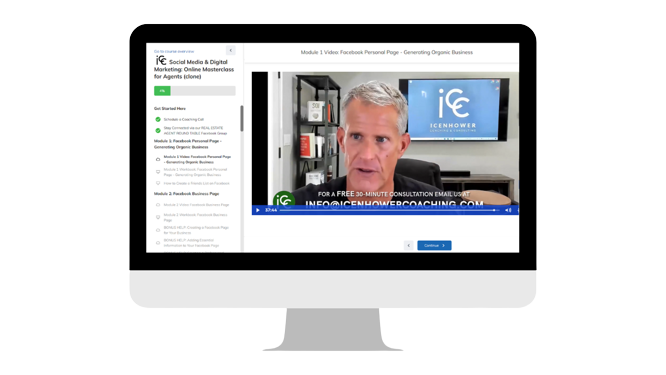
Pick a topic — geographic farming, SOI systems, lead conversion, buyer agent development — and go deep on it. Pull a module from the ICT Agent Management Portal and use it as your foundation. Run it as a mastermind, not a lecture. Ask who in the room does this well. Get agents talking to each other about what’s working.
Before the meeting, reach out to two or three agents you know are strong in that area and ask them to come ready to weigh in. Agents love to speak in front of people — they like being elevated. You’re pulling it out of them, getting the room talking, and building real collaboration.
Run It Like a Television Show
Start on time. End on time. Every single meeting. Your top producers have packed schedules and they will not keep tolerating meetings that run over. One person who talks too much — including your own broker update — needs to be reined in. Give the broker update one minute. This is a production rally, not a lecture.
I always liked to open with what I called “filling buckets.” Before I got into the content, I’d say, “I need three buckets filled before I move on.” Filling a bucket meant thanking someone else in the room for something kind they did that week. It could be they answered a contract question, covered an open house for you, let an appraiser in while you were on the road. Anything. I’d say, “I can’t move on until I get three.” That kept the energy going during those first five minutes while stragglers were still walking in — and I start on time no matter what.
Run your sales meeting like you’re producing a television variety show. Have energy. Be prepared. Perform. Because as strong as your sales meeting is, that’s how strong your retention, your recruiting, and your overall productivity will be.
I became known for this throughout my career and I recruited to it. When the energy is up and everyone’s showing up, it becomes so easy to invite a recruit to come experience one of your meetings. And when they do, they think: “This has never happened at my office. My broker talks for 15 minutes about disclosures I’ve never used, then a mortgage broker takes the mic, and nobody ever once talked about my goals.”
You need to be production-centric. If you want a high-energy office and you want your agents selling more, your sales meeting content has to drive that.
Hope that helps.