Get a free real estate transaction coordinator workflow and job description PDF to run your team's admin department from contract to close, step by step.

Your transaction coordinator may be closing files just fine. The real question is who your clients call when something comes up: her, or your top agent. If it is your top agent, your real estate transaction coordinator workflow has a hole in it, and it is costing you production, retention and recruiting.

In this post I will walk you through the real estate transaction coordinator workflow I teach team leaders, from the first call at contract to the last touch after closing. There is also a free transaction coordinator job description PDF at the bottom that you can hand to your admin this week. If you want the original job description breakdown first, start with our real estate transaction coordinator job description post and come back here for the workflow.

VIDEO: Real Estate Transaction Coordinator Workflow: Free Job Description PDF

A Checklist Is Not a Workflow

Most transaction coordinators think the job is handling contract to close and getting every item checked off. That is the checklist. It is necessary, and it is not the role.

A real estate transaction coordinator workflow includes the client relationship, the weekly communication, the marketing handoffs and the follow-through after closing. In my experience, the stronger the admin, the stronger the real estate team. A team provides three things to its agents, and agents are your clients just as much as buyers and sellers are: leads, coaching and accountability, and strong admin. Admin is where most team leaders are weakest.

If you want the checklist side, grab our Transaction Coordinator Checklist PDF. This post is about everything wrapped around it.

The Real Estate Transaction Coordinator Workflow, Step by Step

1. Pass the baton with a phone call

The minute you go under contract, the listing manager explains that a new customer service specialist is taking over. That specialist handles contract to close, and the client gets her phone number and email address.

Then the transaction coordinator calls. It can be a text to set up the call, but it is a telephone call. I know admins like to hide behind email. Call anyway. Even when the first call checklist says the client prefers email, you still call, because you are building a personal relationship. Tell them you will be with them all the way through.

The goal is simple: when the client has a question, they call the coordinator, not the top agent. Your top agent should be out recruiting, lead generating and going on listing presentations. Here is a number to watch. In my experience, you can judge the strength of an admin by how many phone calls the lead agent gets. If the lead agent is getting a lot of them, the admin is not winning the relationship yet.

2. Send the weekly update, and call every Thursday

Tell the client up front: every week you will get an email from me, on the same day at the same time. It covers what I did, what I am about to do, and every key date. Inspections, contingency removal, disclosures due, closing date. Put them in every email.

Pair it with a phone call. My number here is every Thursday, so clients are not stewing over the weekend and calling the agent on Sunday night. The client does not have to answer. They just know it is coming.

If a client does call the lead agent anyway, the answer is: “I told you not to call him. Call me, because he is just going to call me and ask me anyway.” You have to train clients how you want them to act. They will like it better.

  • ADMIN: The Training Process for Real Estate Administrative Assistants (Icenhower Institute)

    $299
    ICT Online Course

    ADMIN: The Training Process for Real Estate Administrative Assistants

    Admin course Icon (1)

    Master the systems and skills every real estate admin needs to support top agents and growing teams.

    • Training for key roles: Listing Manager, Transaction Coordinator, Office Administrator

    • Systems, checklists, and dashboards to streamline operations

    • Listing management from pre-listing through closing

    • Lead tracking and accountability tools

    • Strategies to free agents’ time for production

    • Downloadable forms, templates, and checklists
    Add to Cart

    Create Structure & Systems

    Learn how to implement checklists, dashboards, and tracking tools that keep your agents and business organized.

    Master the Admin Role

    Gain step-by-step training for listing management, transaction coordination, and day-to-day operational support.

    Boost Team Productivity

    Understand how to free up agents’ time by streamlining processes, ensuring accountability, and driving efficiency across the office.

    Designed for all learning types

    Video Training

    In-depth video training walking you through each module of the course, explaining the strategies, tips, and best practices for using Canva for real estate agents.

    Written Workbook

    Detailed and downloadable written workbook that provides you with a bullet point outline, summarized text, action steps, key takeaways, as well as space for taking notes.

    Instructor Materials

    Teach this course at your organization with the help of our downloadable presentation notes, presentation files, and Instructor's Manual.  

    Mergers & Acquisitions

    Click to watch more about this real estate training course

    Program curriculum

    Enrollment includes access to the following course materials for 6 months.

    Module 1: Introduction
    • Module 1 Workbook: Introduction
    • Video: Communication Foundations
    • Get to know the DISC Profiles
    Module 2: Understanding Job Roles
    • Module 2 Workbook: Understanding Job Roles
    • Video: Job Roles for Admin Staff
    • The Solution Triangle
    Module 3: The Administrative Manager
    • Module 3 Workbook: The Administrative Manager
    • Video: The Administrative Manager: Creating Structure
    • Sample Weekly Calendar
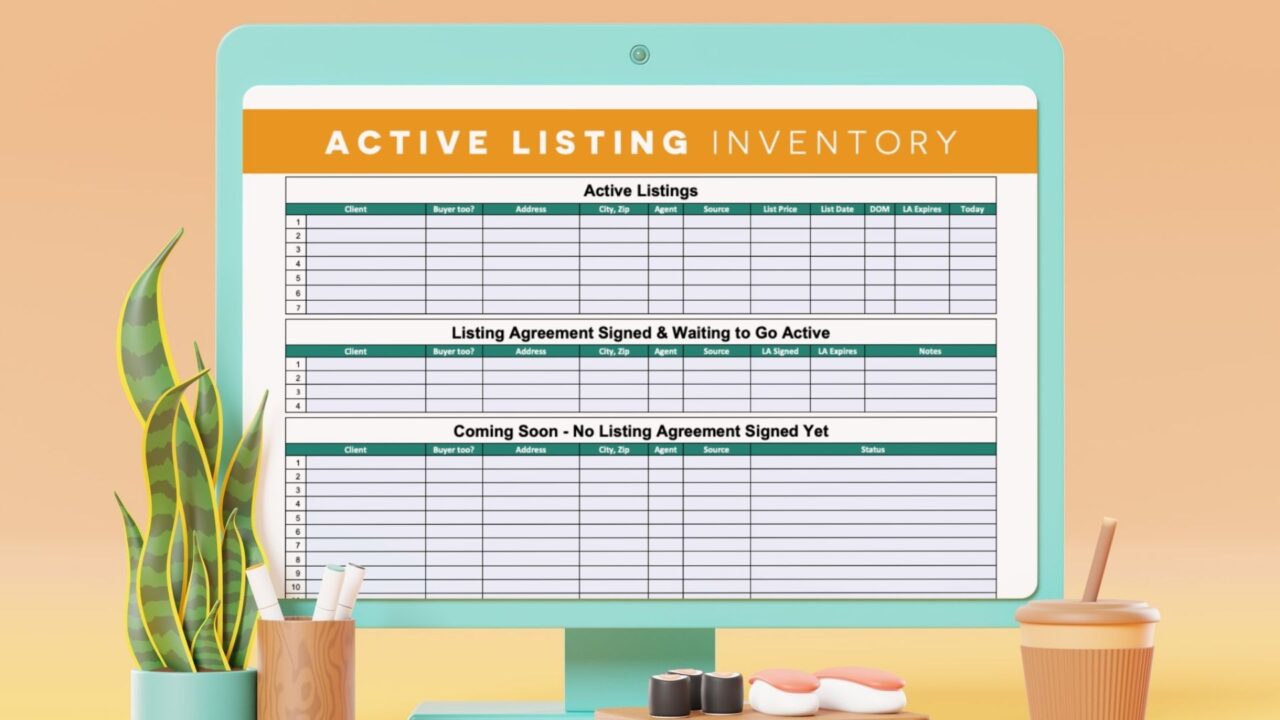
    • Active Listing – blank (fillable)
    • Sample Buyer Inventory
    • Daily Contact Form (fillable)
    • Sample Year-to-Date Check-Up Form 1
    • Sample Year-to-Date Check-Up Form 2
    • Lead Tracking Sheet (fillable)
    • Sample Pending Inventory Pipeline
    • Sample Dashboard 1
    • Sample Dashboard 2
    • Year-to-Date Check-Up Form (fillable)
    • Active & Pending Inventory Lists (fillable)
    • ICC Team Dashboard (fillable)
    Module 4: The Listing Manager
    • Module 4 Workbook: The Listing Manager
    • Video: The Listing Manager: From Listing to Contract
    • Listing and Pre-Listing Checklists
    • Listing to Contract Checklist
    • Pre-Listing Checklist
    • Seller Lead Sheet
    • Assistant’s First Call Checklist
    • Assistant’s First Call Checklist (fillable)
    • Defining Moments in Real Estate Transactions
    Module 5: The Transaction Coordinator
    • Module 5 Workbook: The Transaction Coordinator
    • Video: The Transaction Coordinator: From Contract to Closing
    • Buyer-Seller Checklist
    • Active Listing – blank (fillable)
    • Buyer Closing Checklist
    • Buyer Inventory
    • Buyer Lead Sheet (fillable)
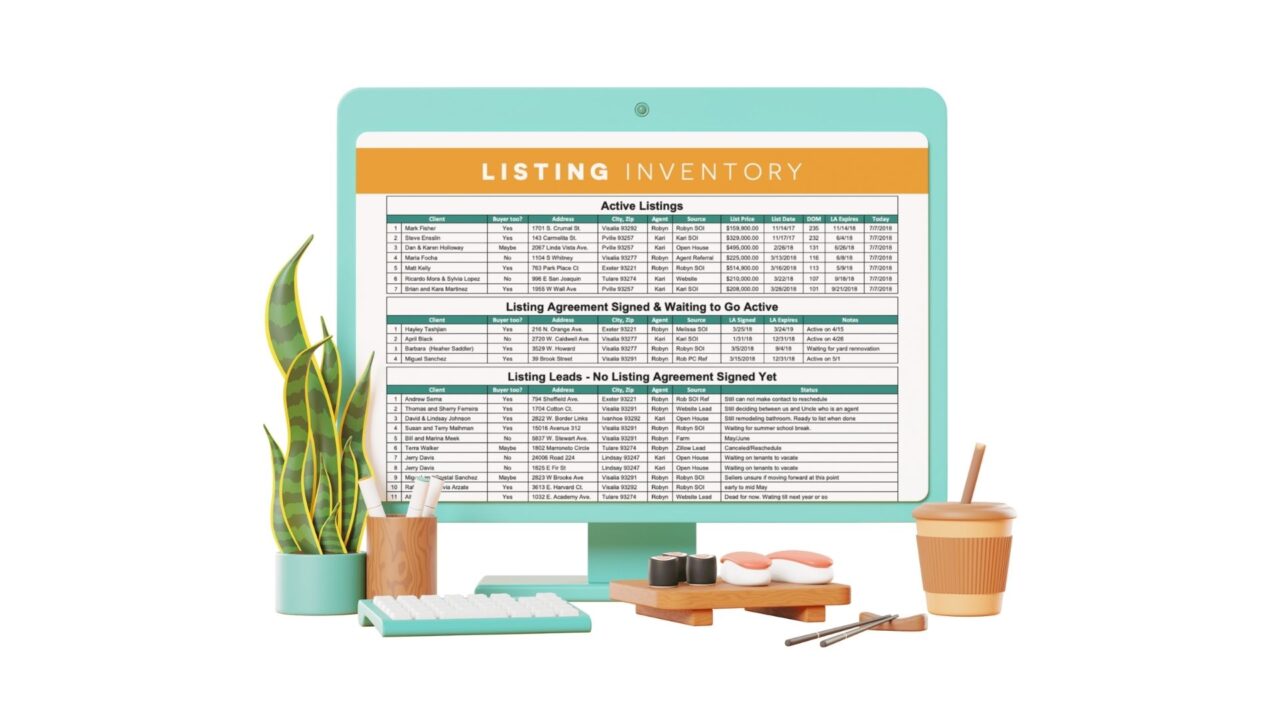
    • Listing Inventory
    • Pending Contracts – blank (fillable)
    • Pending Inventory Pipeline
    • Seller Closing Checklist
    • Buyer and Seller Checklists (fillable)
    Module 6: The Marketing Director
    • Module 6 Workbook: The Marketing Director
    • Video: The Marketing Director: Building your real estate business
    • Buyer Closing Checklist
    • Client Event Contact Plan
    • Listing to Contract Checklist
    • Script: Contacting past and existing clients
    • Pre-Listing Checklist
    • Seller Closing Checklist
    Module 7: Your Sphere of Influence
    • Module 7 Workbook: Your Sphere of Influence
    • Video: Your Sphere of Influence
    • Team Scoreboard
    • Graphic: The SOI Core
    Module 8: Enhancing the Client Experience
    • Video: Enhancing the Client Experience
    • Defining Moments in Real Estate Transactions
    Module 9: Managing Virtual Assistants & Remote Workers
    • Workbook: Managing Virtual Assistants & Remote Workers
    • Video: Managing Virtual Assistants & Remote Workers
    Module 10: Creating the Ultimate Client Experience
    • Workbook: Creating the Ultimate Client Experience
    • Video: Creating the Ultimate User Experience
    • Policies and Procedures Handbook
    • First Day Welcome Orientation Checklist
    • First Quarter Checklist – Admin – alternate
    • Editable First Day Welcome Orientation Checklist
    Module 11: Conclusion
    • Workbook: Conclusion
    • Video: Above and Beyond
    • Leader vs Manager
    • Production Growth Budget Schedule
    • Staff Self-Performance Appraisal
    • Sample Team Annual Business Plan
    • Editable Blank Business Plan
    • Editable Blank Action Steps
    Admin

    About this course

    • $299.00
    • 79 lessons
    • 5 hours of video content
    Add to Cart

    Reviews

    "I use ICT systems, the Icenhower Institute, and the coaching program to coach and train my team of over 30 agents. I use the ICT dashboard systems to keep my entire team accountable for their activities and set proper expectations." Jake Rockwell Over 500 Units Sold Annually "I have coached with ICT for over five years. ICT has helped me quadruple my luxury business through marketing strategies so that I receive listings and sales through lead generation and multiple pillars of income." soi audio workbook Dennis Adelpour Luxury Agent - West Los Angeles "When we started coaching with ICT we worked all the time with some degree of success. Now, seven years later, we have grown to have the #1 market share in our area, we more than tripled our income and production, while also improving our work-life balance to enjoy our personal life with family and friends." recruit audio workbook Tammi Humphrey #1 Market Share & 100 Million in Annual Sales Volume Instructor Brian ​Icenhower.


    Having someone back in the office helps agents amplify their sales potential. They can focus on generating business, following up on leads, conducting appointments, and writing offers/negotiating contracts -- all things that create more income.

    This 9-module course not only identifies the four key roles of a real estate assistant, but it also breaks down the precise workflows when serving as a listing manager, transaction coordinator, marketing director, and administrative manager.

    Whether you’re an agent learning how to train your assistant, an assistant looking for your own training process, or you’re both reading through these materials together, this course provides the explanations and concrete examples of best practices in real estate offices so you don’t have to.

    Make administrative tasks easy.

    Whether you’re an assistant or a solo agent, systematizing adminstrative processes will increase your efficiency. This course gives you the strategies, tools, and techniques to master administrative processes so your agents are free to focus on generating, nurturing, and converting leads. Add to Cart Add to Cart

    Talk to a coach

    If you've been considering hiring a coach, now's the time. Book a FREE coaching consultation session with your purchase of this course! Book Your Call Team Onboarding Real Estate Coaching See all courses

    Quick View
  • 1×1 Solo Agent Weekly Coaching Program

    $1,000 / month

    This 1×1 Solo Agent Weekly Real Estate Coaching Program designed to help you increase your production and your commission income with strategies and systems for sustainable business growth.

    Quick View

3. Work every file, every day

This is the number one law of managing admin: every file, every day. Each transaction gets its own file, and I like those in Google Drive so every agent on the deal and the team leader can see them. Label each file by property address, not by client name, because people can buy and sell more than one property. Put the address in the subject line of every email, so it is easy to search later.

Do it first thing. If your coordinator is in at 8:30, the real estate industry does not wake up until 10:30 or 11:00. Work down the checklist on every file before the phone starts ringing. That is operating by design in the morning instead of by default in the afternoon.

4. Track what you wait on from other people

On the buyer closing checklist, note how many days after acceptance each item is due, and add a column for the things you rely on others for: lenders, inspectors, title officers. Record when you requested it and when you received it. When something is late, the coordinator drives the bus. If that means asking the lead agent to call the lender, that is what you do.

Copy the key contract dates and the contact list from that checklist straight into the weekly client email. Clients have never seen that level of organization from an agent before.

5. Keep a pending pipeline

Keep one at-a-glance sheet of every client under contract, sorted with the most urgent closing dates at the top. This is the scoreboard you review with the lead agent every week. It tells the coordinator which files are in the five-day-before-closing zone where everything gets busy.

6. Let the agent own the celebrations

You do not want the agent erased from the client relationship. You want the agent calling at the good moments: under contract, after an open house with 20 people, when the property appraises, when inspection contingencies are negotiated, when loan contingencies come off, and after closing. The agent is always associated with good news, and the coordinator is the problem solver. That is what protects your referrals and your five-star reviews.

How Many Transactions Can a Transaction Coordinator Handle?

Here is my number, from what I have seen across teams: an experienced, well-structured, full service admin can handle 40 pending transactions at any time. Not many can. A full service coordinator is working with marketing, working with the listing manager and taking over client communication.

New hires are different. You will be lucky if a coordinator can handle 20 pending in the first year, because they are not efficient yet. As I tell team leaders, their ears start smoking at 20. Set that expectation on day one, and you will never be surprised.

  • HIRE: The Complete Hiring Process for Real Estate Agents (Icenhower Institute)

    $299
    ICT Online Course

    HIRE: The Complete Hiring
    Process for Real Estate Agents

    Hire course Icon

    Hire the right people with a proven real estate recruiting system.

    • Step-by-step process for recruiting and hiring agents who fit your culture

    • Interview scripts and questions to identify talent and avoid mis-hires

    • How to evaluate candidates with personality profiles and performance indicators

    • Systems to onboard and train new hires for long-term success

    • Strategies to retain top talent and reduce turnover

    • Downloadable interview guides, scorecards, and hiring checklists

    Add to Cart

    Recruit with Confidence

    Follow a proven system to attract and hire the right agents for your team or brokerage.

    Avoid Costly Mis-Hires

    Use tools, scripts, and assessments to identify the best candidates.

    Set New Hires Up for Success

    Implement onboarding systems that ensure long-term productivity and retention.

    Designed for all learning types

    Video Training

    In-depth video training walking you through each module of the course, explaining the strategies, tips, and best practices for using Canva for real estate agents.

    Written Workbook

    Detailed and downloadable written workbook that provides you with a bullet point outline, summarized text, action steps, key takeaways, as well as space for taking notes.

    Instructor Materials

    Teach this course at your organization with the help of our downloadable presentation notes, presentation files, and Instructor's Manual.

    Course curriculum

    Enrollment includes access to the following course materials for 6 months

    Module 1: Hiring Foundations
    • Workbook: Hiring Foundations
    • Video: Initial Hiring Considerations & Mindset
    • Graphic: The first-quarter check-mark
    • Graphic: The hiring process overview
    Module 2: The Job Description
    • Workbook: The Job Description
    • Video: Creating a Job Description
    • Job Description: Administrative Assistant
    • Job Description: Buyer’s Agent
    • Job Description: Showing Assistant
    • Graphic: Leverage Training Curve
    Module 3: The DISC Assessment
    • Workbook: The DISC Assessment
    • Video: Identifying DISC Behavioral Profiles
    • Graphic: DISC Profiles
    • Graphic: DISC Behavioral Assessment
    • Script: “Applicant Denied” Email
    • Module 3: Get to know the DISC profiles
    Module 4: Advertising the Job
    • Workbook: Advertising the Job
    • Video: Advertising the Job: Getting into action
    • Online Job Post: Administrative Position
    • Online Job Post: Sales Position
    • Script: Facebook Job Ad
    • Script: Calling Affiliates
    • Script: Calling SOI Contacts
    • Script: “Thank you for your interest” email
    Module 5: Reviewing Applications, Getting Behavioral Assessments
    • Workbook: Reviewing Applications, Getting Behavioral Assessments
    • Video: Reviewing Applications & Getting Behavioral Assessments
    • DISC Email Instructions Template
    Module 6: The Phone Screening Interview
    • Workbook: The Phone Screening Interview
    • Video: Who to Look For: The phone screening interview
    • Phone Screening Worksheet (fillable)
    • Follow-Up Phone Screening Worksheet (fillable)
    • The DISC Profiles
    • The DISC Behavioral Assessment
    • Computer Skills Assessment – Indeed.com
    Module 7: The In-Person Interview
    • Workbook: The In-Person Interview
    • Video: The In-Person Interview
    • In-Person Interview Form (fillable)
    Module 8: Reference Checks
    • Workbook: Reference checks
    • Video: Reference Check Worksheet (fillable)
    Module 9: Compensation Considerations & the Final Offer
    • Workbook: Compensation Considerations & the Final Offer
    • Video: Compensation Considerations & the Final Offer
    • Offer Letter for Administrative Staff
    • Offer Letter for ISA to Sales Agent
    • Offer Letter for Sales Agents
    • New Employee Information Card (fillable)
    • Advanced Hiring Considerations
    Hire

    About this course

    • $299
    • 52 lessons
    • 4 hours of video content
    Add to Cart

    Immediate Takeaways

    Here is what you can expect to gain from taking this online course.

    • SCRIPTS Applicant Denied Email, Facebook Job Ad, Calling Affiliates, Calling SOI Contacts, Thank You For Your Interest Email, and more.
    • FORMS AND LISTS to streamline processes. DISC Email Instructions Template, Phone Screening Worksheet, DISC Behavioral Assessment, In-Person Interview Form, Reference Check Worksheet, Offer Letter Templates, New Employee Information Card, and more.
    • GRAPHICS to illustrate key concepts. The First Quarter Checkmark, The Hiring Process Overview, Leverage Training Curve, DISC Profiles, and more.
    • JOB DESCRIPTIONS so you don't have to reinvent the wheel. Job Descriptions for Administrative Assistant, Buyer's Agent, Showing Agent, Online Job Posts, and more.
    • OPTIONS for how you learn best. Each module provides a downloadable PDF chapter as well as a featured video of Brian Icenhower, teaching the topic at hand. At the beginning of the course, you are also provided with a full audiobook to listen to. So however you learn best -- we have an option for you!
    Certified Hiring Specialist _CHS

    Certification & Designation Upon Completion

    In this ICT online course, you will receive an official designation of "Certified Hiring Specialist" or CHS upon completion, as well as a downloadable (and printable) Certificate of Completion. Add your designation seal, as well as your designation letters, to your email signature to bolster your reputation and show off your expertise to clients and colleagues alike.

    Reviews

    "I use ICT systems, the Icenhower Institute, and the coaching program to coach and train my team of over 30 agents. I use the ICT dashboard systems to keep my entire team accountable for their activities and set proper expectations." Jake Rockwell Over 500 Units Sold Annually "I have coached with ICT for over five years. ICT has helped me quadruple my luxury business through marketing strategies so that I receive listings and sales through lead generation and multiple pillars of income." soi audio workbook Dennis Adelpour Luxury Agent - West Los Angeles "When we started coaching with ICT we worked all the time with some degree of success. Now, seven years later, we have grown to have the #1 market share in our area, we more than tripled our income and production, while also improving our work-life balance to enjoy our personal life with family and friends." recruit audio workbook Tammi Humphrey #1 Market Share & 100 Million in Annual Sales Volume Instructor

    Brian ​Icenhower.

    Nine simple but vital steps, this course walks you through the optimal hiring process so that you can get the right person hired the first time around.

    The whole hiring process is designed for busy professionals who don’t have a lot of time to invest in hiring but still need to make a smart and selective hire.

    Whether you’re hiring administrative staff or commission-based sales agents, we walk you through every step carefully and completely and make the entire process very simple and accessible.

    Make a smart & selective hire.

    Your business depends on it.

    This Hiring Process for Real Estate Agents course provides all of the necessary materials to compile a complete "Hiring Operations Manual" for your real estate business. Complete with job descriptions, online job posts templates, interview worksheets, reference check forms, compensation structures, offer letters and so much more, this process will ensure that you attract a large number of quality applicants to ultimately hire the most talented people for your team. Add to Cart

    Talk to a coach

    If you've been considering hiring a coach, now's the time. Book a FREE coaching consultation session with your purchase of this course! Book Your Call Team Onboarding Real Estate Coaching See all courses
    Quick View
  • 1×1 Solo Agent Weekly Coaching Program

    $1,000 / month

    This 1×1 Solo Agent Weekly Real Estate Coaching Program designed to help you increase your production and your commission income with strategies and systems for sustainable business growth.


    Quick View

Why You Pull Out the Job Description Every Quarter

I know job descriptions bore people. Most business plans get written and never looked at again. But the job description is how a new coordinator grows past 20 pending files.

Here is how it works. When you hire a coordinator, they build their systems from contract to close, and everything else gets handled when you get to it. Tell them plainly that they are not doing the full job yet and that training takes a year or two. It is also a good reason to raise their pay as they take on more. If you wait two years and then drop new duties on them, the answer will be, “That is more work. How much more do I get paid?”

Every quarter, open the job description and pick the next duties to add. Let them master the systems they have learned, compress them into less time, then add more. Keep adding until they are running the full description. If you skip this, they get comfortable at their current level and never learn to go past 20.

Busy season matters too. Prep your coordinator before the spring and summer rush, because a person used to a slow pace gets worn out quickly. If they are taking summer vacation, suggest July and August over June. June is when contracts and closings both peak.

What Strong Admin Does for Recruiting and Retention

Agents leave teams that run too lean. They say, “I can hire a transaction coordinator by the file myself, and I get nothing else from the team.” That is turnover you caused.

The other side matters just as much. Experienced agents who are slowing down, doing 10 to 15 transactions a year, want everything off their plate. They bring influence in the local market that attracts other top producers. Without strong admin, you end up with a team of new agents, and the label sticks. Seasoned agents will not demote themselves in front of the whole industry to join the new agent team. Strong admin, and a job description that grows every quarter, is a recruiting tool. You can see how it fits the rest of the department in our Team Listing Manager job description and our Real Estate Team Manager job description.

Get the Free Transaction Coordinator Job Description PDF

I put the full job description into a free PDF you can use right now. Hand it to your coordinator, mark which duties they own today, and set a date on the calendar to add the next ones.

Fill in the form below and the PDF lands in your inbox, along with my weekly training email.

Your action checklist for this week

  1. Schedule the baton-pass phone call at contract, not an email.
  2. Pick the day and time for the weekly client update and call.
  3. Put every file on a checklist, labeled by address.
  4. Block the first hour of every workday for every file, every day.
  5. Count your coordinator’s pending files and compare it to 20 and 40.
  6. Put a quarterly job description review on the calendar.

If you are deciding whether to hire a coordinator or an assistant first, read Should Agents Hire a Real Estate Transaction Coordinator or Administrative Assistant? And if you want help building the admin department on your team, book a free coaching call with our team coaching team.

Want to see the whole thing in action? Watch the full video for the complete real estate transaction coordinator workflow, and subscribe to the ICT channel for a new training every week.

Video Transcript

Prefer to read along? Here’s the full transcript from this training video.

Brian Icenhower: Hey, everybody. It’s Brian Icenhower. I wanna talk about the transaction coordinator role on a real estate team. And again, this takes lots of different forms depending on how big your team is. So just a quick recap. When you first hire your first admin, they’re doing a lot of listing manager work and a lot of transaction coordinator work and not much marketing director work at all, and probably no administrative manager work. But as you grow, you start to break these apart a little bit and you have two people running one and two running the other until ultimately you have four different people in every one of these roles. So what I really wanna focus in here is number two, and that’s that transaction coordinator that handles both buyer and seller clients of yours all the way from contract to closing, and what that looks like. I wanna isolate that role and talk about it.

The first thing that I want you to understand is, I know this bores everybody. Like business plans, people create one of these and never look at it again. But guys, the job description is crucial with all admin positions, really all positions. Because when they start, generally speaking, most transaction coordinators think their role is handling contract to close and all the necessary items to get transactions closed. And if you don’t pull out this job description on the regular and show that no, you’re responsible for running the marketing side out of it, too. You’re the one that knows when the under contracts need to go out. You’re the one that’s doing the communication with the client on a weekly basis, because I don’t want my agents doing that. In fact, when my clients call, I want them to call you, not the agent. You’re more available. You know what’s happening real time with the transaction. So I want you proactively reaching out to them. I want you doing a lot of things with marketing, because you’re gonna be the one that tells the marketing director when things need to go out and by when. So it’s not just a simple checklist of here’s all the items we need to do and complete to get this contract closed. That is not the role, because the stronger the admin, the stronger the real estate team.

There are three things that we provide as a real estate team to our clients, and our clients are our agents. And I’ll tell you right now, the three things that a team provides to its agents are some sort of leads, coaching, mentoring, accountability, and strong admin. That’s where most people are very weak. They pay transaction coordinators by the file, or they don’t pay them that much. They’ll really try to be skinny on the admin because expenses are scary. It’s hard paying people every two weeks when you don’t have production. So that’s where the big Achilles heel shows up and most agents leave teams saying, “I can just go do the same thing, get a transaction coordinator by the file. Sometimes even hire the same one, and I don’t get anything else from the team.” So you see that turnover. It’s just too lean for retention and certainly not gonna help you with recruiting.

But I can’t tell you how many experienced agents that are trying to slow down, that have 10 to 15 transactions come to them a year, have tons of influence because everybody respects them in the local real estate community, maybe don’t do that much, but they bring your team 10 to 15 transactions a year and give you a lot of influence that attracts other top producers to the team, because most teams just have a bunch of non-producers that look for you for mentoring with transactions until they don’t need mentoring anymore, then they go off on their own. So we need to have stronger value. There are tons of seasoned agents that really want all that taken off their plate. They’re seeing what’s happening with all the marketing that’s out there, all the social media, people have really upped their marketing game in a big way. They can’t keep up with that. They don’t wanna keep up with that. They don’t wanna keep up with the nightmare closings, especially during the summer and the busy seasons. So you get a lot of halfway golden handshakes where people say, “I’m gonna go over there and I’m just gonna meet with my clients and find them property and list their property, and I’m gonna have these people handle all the other stuff.” One of the biggest weaknesses I see starts with the transaction coordinator’s job description. So I’m gonna show that to you.

So you can see here, this is actually a long job description. It goes two pages and it covers contract to close management. This is all the stuff they need to do, and they expect they need to do. But they also need to communicate with the clients and take communication with the clients away from the agent as much as they can. And the better the transaction coordinator, the more contact they’re gonna have instead of the agent. They’re gonna coordinate obviously with agents, lenders, and escrow. They’re gonna make sure everything’s compliant, with the brokerage or the office. And they’re gonna work a lot on closing prep and follow through because we’re gonna need marketing after closing to try to get more referrals, to try to create a better client experience and they’re gonna have to coordinate after closing to make sure that we’re going after online reviews and referrals and all those other things coming down the road. I’m not gonna go into detail. You can grab this from me.

But here’s the other reason. This is probably the most important reason for a job description. When you first bring someone on, there’s no way they’re gonna be able to do all that. You may not even know how to tell them how to do it yet. You just wanna implement it later. Especially brand new transaction coordinators, they’re gonna try to develop their systems from contract to close, and everything else is when we get to it. The key is you gotta remind them they’re not doing their full job yet. Because if you try to come back a year or two later and say, “Now I want you to do this,” they’re gonna say, “That’s great. That’s more work, though. How much more do I get paid for that?” They gotta understand there’s a long training period here. It maybe lasts a year or two. Right up front they have to know that, and it could be the reason that we increase pay salaries, ’cause you’re not doing the full job. We have to train you for a long time here. And what ends up happening is, over time they’re gonna master these systems, they’re gonna compress those systems because they’ll get fast at them, and then there’ll be room to add on more, and that needs to be explained every single time for lots of reasons. They have to learn that we’re gonna keep adding, and it may take up to a year or two before you have all your systems and you’re running efficiently.

And that’s one of the biggest problems we find with time management with agents, is that, especially during the busy seasons of the year, they tend to overwork. Any human would. They’re used to operating at a very slow level, going out and getting their latte midday. And then all of a sudden the busy season hits, and it’s, oh my gosh, they’re out of shape. They’re completely out of endurance. And what happens is over the busy season they feel like they hate this job, especially for those of you that have busy seasons that are in the spring and the summer, when they probably also have kids out of school and trying to take vacations.

So we have to prep them for that up front before we hire them, and then prep them for it before we move into the busy season, because this is what’s about to happen. We gotta prep them: hey, maybe if you’re taking summer vacations, take them in July and August, not in June, because June for those people that have summer, that’s the busy time of the year. That’s when we’re both writing contracts and closing at a high level, ’cause we write a lot of contracts in May and June and we close a lot in May and June. July we’re typically just closing more, and then August. So it’s a little bit easier at that time. Plus, you got 4th of July mixed in there, and a lot of people take a week or two off at that time, so it slows. Getting people to take off around 4th of July, that’s a great time for a summer vacation. So just prepping them on that. And even if they don’t take your advice, ’cause you can’t control when they wanna take all their vacations, but understand you can say, “Hey, I told you it’s gonna be tough the week before, and when you’re gone, and the week when you come back,” ’cause it’s hard to enjoy a vacation in June.

I’ll tell you that right now. So let them know up front, and then talk about the bandwidth of this position. I can tell you right now that an experienced, well-structured, full service admin can handle 40 pending transactions at any time, and there aren’t many that can handle that. There just aren’t, especially full service ones that are actually coordinating with marketing, coordinating with listing, taking over client communication, all of that type of stuff. But experienced ones can. We’ve seen many do it. But understand they won’t be able to handle 40 their first year. You’ll be lucky if they can handle 20 pending their first year because they’re just not efficient at it yet. They haven’t had enough time in the chair learning how to do it. It takes time. If we’re not very careful with pulling out the job description every quarter to go over it to see which types of duties we can add next, they’re not gonna ever learn to go past that 20 transactions. We have to let them compress the systems they’ve learned and then add new tasks from the job descriptions at least every quarter, so then they can learn those and master them and then compress them down to efficient time and then keep adding and keep adding till we have the full job description.

And most people think of admin as an afterthought. All they’re concerned about is lead generation and getting more business and more agents, and they leave admin and operations completely on the back burner. But we have to be growing those job descriptions regularly to get that endurance up, or they’re just gonna get comfortable at their current level and never learn to get better, if that makes sense. So we have to be upfront and explain that you’re gonna learn all this, that we’re gonna give them time, and here’s why. Learn to say, “Hey, good admins can handle up to 40 pending. Your ears are gonna start smoking at 20.” And we have to set that expectation moving forward because that is a crucial value add the team provides to its agents.

You’ll see the teams that don’t have strong admin doing all of this, they have either a lot of turnover. They lose a lot of agents to just going on their own or going to other teams that have stronger admin, and more importantly, their agent population is just a bunch of new agents, and it’s very hard to get top agents. So you’ll be stigmatized: “I’ve got the new agent team,” so no talented, experienced, seasoned agents are going to want to join your team because you’ve established yourself that’s where new agents go. Why would I ever, in front of the entire real estate industry, demote myself that I need to go back on your team? And so it’s very important. If you want agents that bring you a lot of business from strong databases, strong spheres of influence, one of the key ways to do that is through strong admin and having strong admin systems and paying a little attention to it. It doesn’t need to be your focus, but every quarter or so, we gotta try to add more and keep building those job descriptions out and reminding them that’s how it works.

What I’ll do, just like with the listing manager doing a first call checklist, is the minute that we go under contract, the listing manager is gonna explain there’s a baton passing right now. It’s gonna be a situation where we explain, “Hey, you’re gonna start working with a new customer service specialist that just focuses on contract to close ’cause a little bit more is involved there. She’s coordinating with tons of different people but here’s her phone number, here’s her email address. She’s gonna be reaching out to you the minute we go under contract, whenever that is.” And the minute we go under contract, it is a telephone call. Could be a text to set up the telephone call, but it is a telephone call. I know in the admin world, we like to hide behind emails, but guys, we gotta take away client communication, and most people don’t like emails. I love ’em, but I’m weird that way. And you’re gonna learn, and you’re gonna look at that first call checklist that the listing manager created about their communication preferences. Now, I’ll tell you, even if it says email, that they like emails too, you’re gonna still call ’em because we need that personal relationship. Say, “Hey, I’m gonna be working with you all the way through.” And then you’re gonna set the expectation that you’re gonna head off client communication ’cause remember, the goal here, just like with the listing manager, is to get them to call you, not to call the top agent.

The top agent needs to be out there recruiting, lead generating, going on listing presentations, whatever, on offense. And quite frankly, they don’t know what’s going on. They’re panicked, and they’re usually a hot mess. So we’ve gotta take away that relationship, and we don’t just take it away in a rough way. We gotta earn it, so we really wanna reach out and explain the things that we already know from the listing call checklist, as if she’s had a conversation with the listing manager. Confirm some things and tell ’em, “Hey, every week you’re gonna be getting an email from me at this time on this day that’s gonna tell you everything I’ve been doing, everything we’re about to do that’s coming up next, and it’s gonna remind you of all the key deadlines.” Like, for example, when are our inspections gonna be held? ‘Cause I’m gonna be setting all those up and I’m gonna be communicating with you to set all those up. When are our contingencies going to be waived? When are the disclosures due? What’s our closing date? All of that, you’re gonna be reminded of those in that email every single day. I’m gonna tell you what we did, what we’re gonna do, and remind you of all the key dates. And then I’m gonna probably call you, and you don’t need to answer that phone call, but I want you to call me if you have any questions, because I’m the one that knows everything that’s going on.

Brian our lead agent, he’s amazing at selling houses and getting things going. But he uses his mouth, I use my brain. And I really want you to put the agent down. He’s the salesman, I’m your customer service concierge. I’m here for you, so please call me. You have my number. I’m sending you my contact. And you can text them the contact so they have it in their phone to call you. Because you can judge the strength of an admin by how many phone calls you get as the lead agent. And if you get a lot, that means the admin is not winning over the relationship.

So we really want a soft glove transfer here that actually doesn’t feel awkward, that it actually impresses them. We want to create that wow customer service client experience. And so I want them to always know that I’m gonna be calling them every single week, and they’re also gonna get an email, so that if they have these impulse questions that they feel like they need to reach out and call the agent that they personally know, they know we’re gonna be calling them every Thursday. So they don’t have to freak out about it on the weekends, on Sunday nights when they get home from work, and make the agents’ lives miserable. We want the dentists to love the customer service provided by the hygienists so that people actually prefer them and prefer going to them. It’s absolutely crucial for pulling client communication away. So let them know when it’s coming. Let them know a phone call’s coming too. You don’t need to answer.

Please call me. If they ever do call the lead agent, say, “I told you not to call him. You call me because he’s gonna just call me and ask me anyway.” You literally have to train them how you want them to act. And it may be different than other agents they’ve had in the past, and they will like this better if you follow this system. They’ll say, “Wow, these guys are amazing, man. They’re all over me. I never have to call them. They always call me. It’s fabulous.”

With time management, we have a checklist that we follow, and again, I’m not gonna go into a lot of detail about it, but you can clearly see what I’m talking about. Again, you guys can download this. It shows how many days after a contract’s accepted, and this is the buyer closing checklist, and when it’s completed. And then we also over here to the side put, a lot of things we’re relying on other people for. Lenders, inspectors, title officers, things like that. And so I need when we requested it, and then I also need to know when it was received. So that way, as we’re working down through the days on the checklist, we can say, “Whoops, we still haven’t gotten that. I gotta bark at them again and get that.” So we can’t ever say it’s them because they didn’t get it to me on time.

No, you drive the bus. Strong admin drives the bus and makes sure we get these people. And there might even be a call to the lead agent saying, “Hey, I need you to call that lender because I cannot get this, and I need this.” You see what I’m saying? You’re the leader as the transaction coordinator. So how many days typically after acceptance we need to get things done is listed here. Now, that will change if you have short transactions versus long transactions and things like that. And then it gets really hot five days before closing. There’s a lot of stuff going on day of closing, a lot going on. Then after closing, we’re doing a lot of customer service, a lot of marketing and things like that after closing. So again, you’re coordinating with that marketing director and the lead agent to make sure things are getting done. You’re also gonna be ordering the lead agent around a lot here. And you can see down at the bottom, we always put the key contract dates and deadlines that are listed. Why? They’re gonna go in our weekly emails. Here’s contact information for all of your key people that you’re gonna work with through the transaction along with when all these things are gonna occur. And we’re just gonna copy and paste that basically into that email to our clients, so they’re up to date just like we are, and they’re gonna love it. They’ve never seen that type of organization coming from someone that represented them in real estate in the past.

Now, we have a similar checklist for the listing side, it’s pretty similar all the way down with the contracts and dates that you use. The last thing is you’re gonna, as you meet with your team especially your lead agent, you’re gonna have a pending checklist. They don’t like a lot of detail. I like to see all of our checklists in Google Drive. That way you can share access to them with everybody, each agent. Some people use a program called Slack out there. It’s an app that they use, so that every agent that’s on board on the file has access to it, and the lead agent, the rainmaker, the team leader, has access to all of them. And I like Google because it speaks everybody else’s language.

And I like to set my files up every file, every day. And this is my law. The number one law in managing admin is every file every day, which means typically as an admin, you’re less busy in the morning. You’re gonna organize in different files all of the transactions you have going. Listing manager too. And they’re labeled by the address, not by the name of the person, ’cause they can buy and sell two properties or multiple properties. So we label them by address. Every email communication you send out to anyone has the address as the subject line. That way it’s easily searchable when they save their emails.

From a time management perspective, in the morning when agents should be lead generating or recruiting or making their recruiting calls, I want you to go through every single file, and at the top of that file should be your checklist, along with all the other documents you have. And I want you to work down the checklist as far as you can, every single file, every day, first thing. Why? Why first thing? If you get in at 8:30 in the morning, real estate industry doesn’t wake up till 10:30 or 11:00. So you can actually get through them without a lot of interruptions. If the agent’s interrupting you, they should be lead generating. They should be recruiting. They should be doing their work then. So everybody’s doing their own big rocks that they’re working on in the morning. And usually the agent calls and a lot of the other calls don’t start happening until 10:30, 11:00. It’s usually 10:00 to 2:00. Definitely 11:00 to 1:00 is when most people in real estate work.

So we really want to be pushing every file every day prior to that, because that’s when you’re gonna have the least interruptions. Then everybody’s getting back to us throughout the day. Then we’ve got our job done. We’re operating by design in the morning. Then we’re just operating by default in the afternoon. They’re coming to us, everybody’s responding to us, everybody’s asking us things, opening new files, things like that, client communication, all of it’s happening after that. But first thing you do is go every file every day, every single day, and we try to push down the checklist and get everything marked off as fast as we can, and then we come back and respond to everything.

You’re typically also gonna have a pending inventory pipeline that we’re gonna be showing them, and that’s the same thing. It’s basically at a glance. So this is what we’re gonna usually meet with our team about every week or at least the lead agent, where we can see every single client and where we’re at a glance. And any communication that needs to be happening about these pendings that has not occurred will happen. We can see what’s coming and where we’re at. So that’s just a nice scoreboard of what we’ve got under contract right now, so we can see the big picture, and it stirs up conversations about it, and it shows the prospective close dates, and we typically wanna put the most urgent close dates at the top and then go backwards so that we know these are the ones we have coming up. Here’s how many we have closing. It’ll really help your agents get an idea of when closings are coming up. We know that when closings are coming up, there’s gonna be a lot more communication, there’s gonna be a lot more tasks that we need to pay attention to, and it reminds the admins, oh, these are my focus ones right now, ’cause I’m getting into that five-day before close area where things are extremely busy. Showing that is very important.

The other point that I wanna make here is you’re gonna see on the checklist, we don’t want the client relationship to be lost between the lead agent and the client. What I want is I want the lead agent to be contacting the client out of nowhere at certain moments of celebration in the transaction. For example, after we get it under contract, I want the agent reaching out. After we have an open house that 20 people attend, I want the agent reaching out and congratulating them. I want the agent reaching out after the property appraises on the listing side. I want them to celebrate. I’m saying, “Guys, a lot of these houses don’t appraise right now, so you should celebrate. This is good news. I’m relieved to hear it.” I want the agent reaching out when all of the inspection contingencies have been negotiated and say, “Hey, we’re clear to close. We’re moving forward here.” Loan contingencies have been removed, things like that. And then after closing, of course, because I want the agent to always be associated with good news, and I want them to feel good about contacting their clients. I want them to be happy times. I want them to remember for referral purposes and five-star review purposes, I want them to remember the good times.

So I do want there to be a lot of communication. I just don’t want the agent to be the problem solver associated with that. I want the good customer service person who’s used to solving them all the time getting better at that communication. That’s why in the profile, we wanna see a strong S because they’re really good at that customer service and don’t get panicked by it. A C keeps us compliant, but if we have too much C and not enough S, we’ve got poor bedside manners oftentimes, and they aren’t the best at soothing the client. So we have to be aware of that because we do see that in this industry a lot. High C’s because we’re so worried about dotting every I and crossing every T, but not a lot of good customer communication there.

So we gotta work on getting that S up and really keeping customer service first of mind here ’cause that’s our goal: five-star reviews and future client referrals, of course. So that’s the key. But it’s every file every single day, and we’re trying to take as much off the agent’s plate so that they have no excuse and they have to lead generate for more business and do what they’re supposed to be doing to grow their businesses. Because the agents are our clients just as much as the clients are our clients. So we have to remember that. As much as agents annoy us, we’re here to add value to them, and admin is one of the most underrated ways to do it and most needed ways to do it out there. So hope this helps.